How Sorare scaled up asset production with Figma variables
Faced with a growing need for assets, Sorare's marketing team created a variable-based system that dramatically accelerates their production. Let's take a behind-the-scenes look at its implementation and discover how it has impacted team productivity and work.
Sorare is a sports simulation game launched in 2018 by Nicolas Julia and Adrien Montfort, in which players manage a virtual team via the purchase, sale and exchange of digital player cards. Using Ethereum-based blockchain technology, the game allows participants to compete via soccer, basketball and baseball teams. Sorare currently has over five million users.
The vast number of leagues, players and categories implies the production of a huge quantity of cards. The need for marketing assets is equally great, and until recently, production was slow and tedious, keeping designers busy for weeks on end with intense manual work to design campaigns for all the leagues.
Speeding up card production with Figma
Initially, the team created player cards using a third-party tool. Today, Figma serves as a platform for combining all card elements. Creative and technical work is considerably simplified and accelerated: Figma is deemed easy to use, fluid and fast, improving dialogue with developers and enabling quick validation of designs. "Actually, Figma brings together all the people involved in creating cards. It's really perfect for collaborating on our designs," explains Philip de Canaga, Senior Creative Lead at Sorare.
Since Sorare has adopted Figma, the design and marketing teams share a component library that automatically updates the icons, logos and other elements forming the graphic base of these cards. When the product team changes a component or icon within a library, the update is made automatically, providing consistency between the product and marketing assets. According to Philip, this component system has quadrupled card production and significantly streamlined workflows.
From design to code with Dev Mode
Once card designs have been validated, developers use Dev Mode to automatically import features such as spacing, boxes and layers, which determine the composition of each card. The feature helps them find the right information easily without needing to convert measurements, and allows them to share a common language with designers.
Thanks to this step, the developers were able to thoroughly analyze how cards were built. As their number increased, they eventually created an SVG export system based on the Figma file, which links the masters to the various contents required for each card, further speeding up their production and facilitating changes to logos, texts and icons for example.
Boosting production with an Asset System
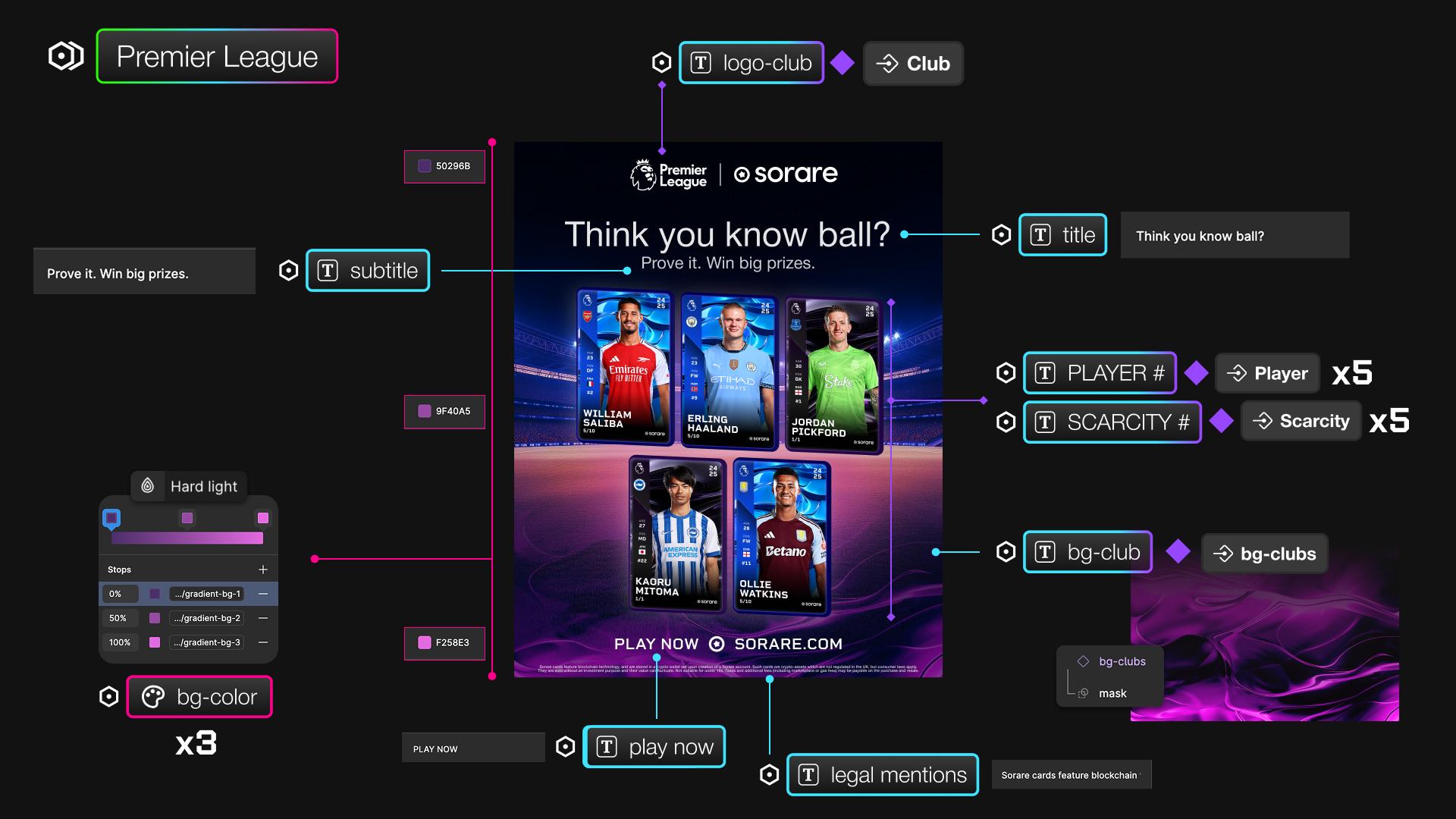
Although Figma had considerably speeded up asset production, the sheer number of assets was regularly overloading the marketing team. To tackle this problem, Sorare recruited a designer with extensive experience of Figma variables. Nabil Amara, now Creative Marketing Designer, creates visuals for social media and campaign assets, including those for Special Editions, the limited-edition cards favored by gamers. Alongside this graphic design work, Nabil has also set up an Asset System, enabling project managers to mass-produce visual media using variables.

Allowing control and flexibility
Setting up an Asset System for a specific campaign involves just a few steps:
- Marketing brief
- Key visual creation and validation
- Precise definition and naming of variables
- Creation of different asset formats
- Iteration and testing phase
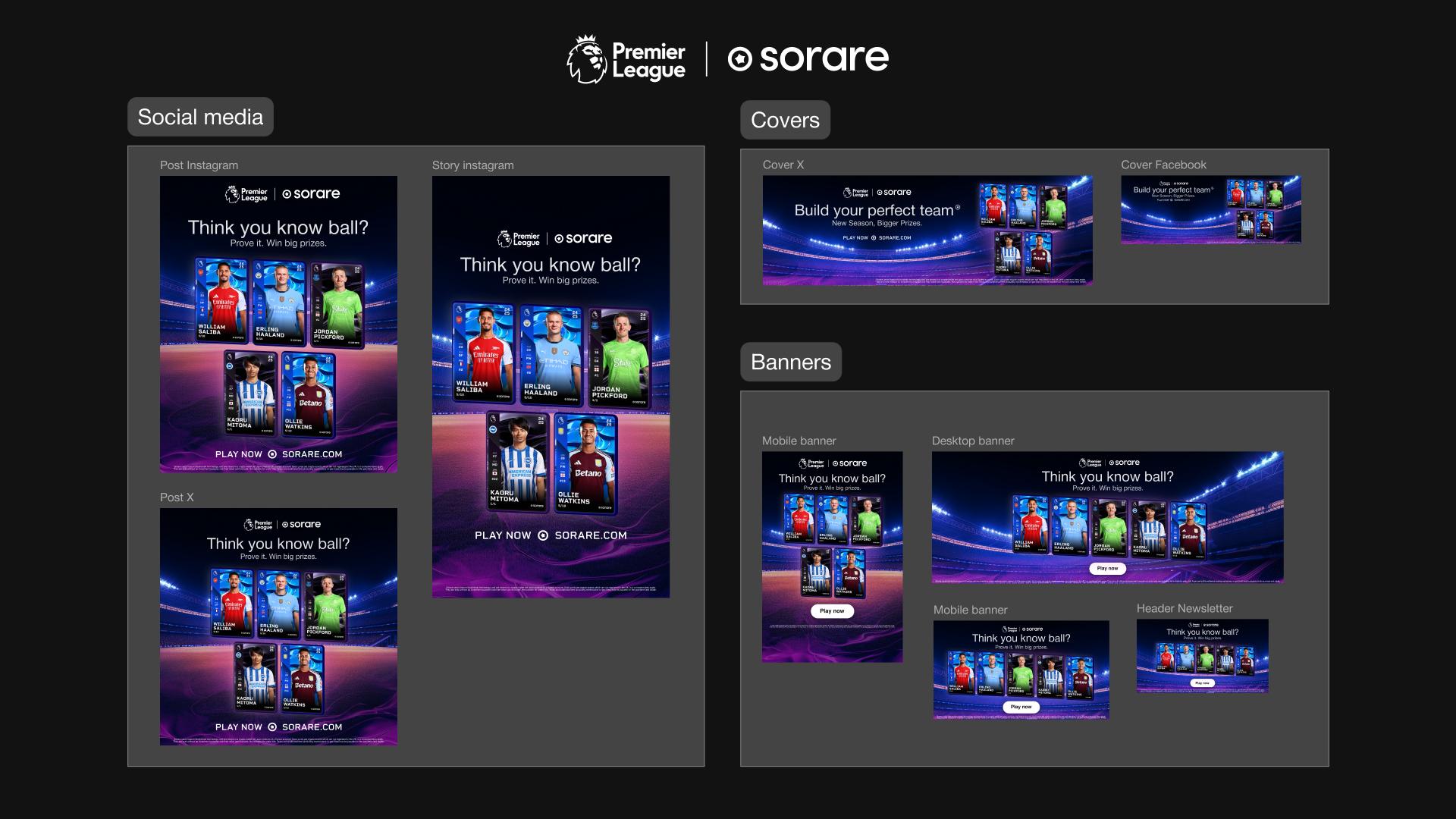
- Transfer to the marketing project manager, who duplicates the model and sets up the variables, adding new modes for different clubs as required
- Declination, acceptance testing and manual tweaking to ensure visual quality

Prior to this, Asset System users have been trained to use variables, and have been provided with a tutorial on how to customize the visuals. For Bastien Revel, Strategic Partnership Manager, "this makes Figma accessible to project managers and novices. It saves time for everyone, especially the marketing team, who now have the elements they need to create assets once the templates have been prepared." And thanks to automatic component updates, all elements from product to marketing are in sync. The result? A consistent flow, from start to finish.

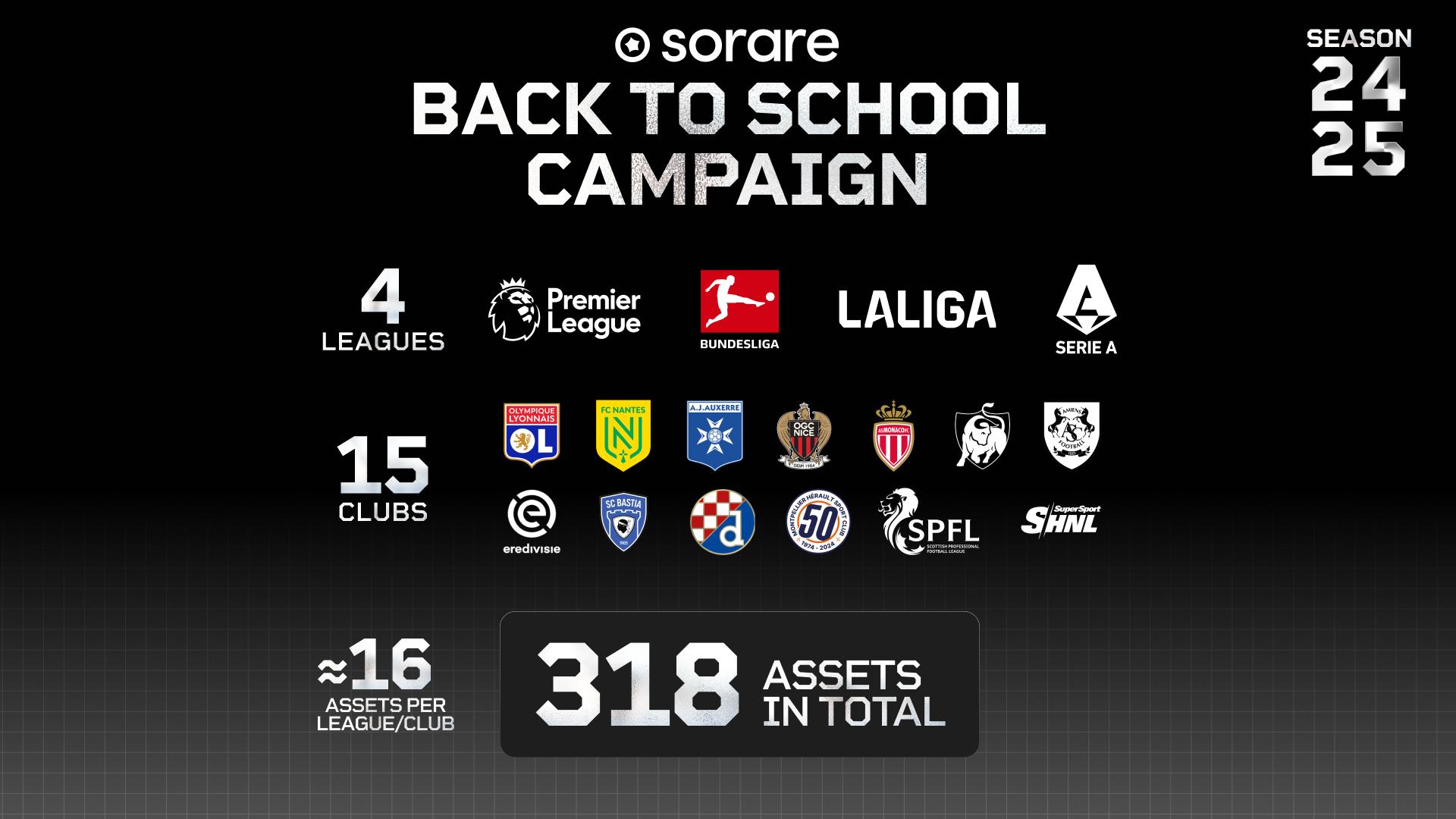
Nabil says the benefits are many: "With the Asset System, teams can save time and improve their quality of life, work is easier and more pleasant, and the quality of the final output is higher, as the variables reduce the margin of error." There are also financial gains, since producing via the Asset System requires fewer staff, with working time divided by three. It has also enabled Sorare to maximise the use of rights negotiated with sports leagues and increase the number of potential assets. In fact, instead of requiring three weeks, production now takes just one week for Nabil to create a campaign and its Asset System, and just one hour for marketing to prepare a new set of assets (league/club), adding a variable mode with new texts, colors, logos and maps on Figma.
To find out more, watch the video of Nabil's talk at the Friends of Figma event held on 20/02/2025 (available in French with automatic subtitles).
Upcoming developments
To take things a step further, teams at Sorare are working on a plugin to integrate their API with Figma, which will automatically call up cards when creating assets. In addition, the marketing team is considering the creation of an adaptable, global Content System for the brand, dedicated to organic social media content and the best available cards. By linking this Content System to the Design System library, the marketing team will have access to a version dedicated to the product team. This will be a more dynamic, modular and adaptable version of the existing Asset System and will streamline production for Sorare's teams even further!
Moving forward with Figma Buzz
According to Nabil Amara, Figma Buzz now offers the potential for massive and easy graphics production. The tool shares many similarities with Sorare's asset system, including the easy, automatic production of assets from a table (variables vs .csv), as well as simplified handling of the various design elements (texts, colors, variants, etc.) via an intuitive interface that is accessible to novices. Sorare's teams are currently exploring the tool, with the aim of industrializing the production of various assets.
Create high-quality assets faster with Figma Buzz
Empower all your teams to create on-brand assets by publishing ready-to-use templates in Figma Buzz.
See how Figma can help you scale design
Great design has the potential to differentiate your product and brand. But nothing great is made alone. Figma brings product teams together in a fast and more inclusive design workflow.
Get in touch to learn more about how Figma can help companies scale design.
We’ll cover how Figma can help:
- Bring every step of the design process—from ideation, to creation, to building designs—into one place
- Accelerate design workflows with shared company-wide design systems
- Foster inclusivity in the product team process with products that are web-based, accessible, and easy to use