How Spendesk leveraged Figma to complete a brand redesign
For Spendesk, a Paris-based fintech unicorn and leader in spend management and procurement, evolving from a startup to a premium brand was a strategic overhaul that required them to break the silos between teams.
As the company moved up market to target mid-market customers, the brand design team saw an opportunity to reinvent Spendesk’s identity and product UI and to collaborate more closely with the product team. The idea reached its full potential when other departments—such as engineering, user research, analytics and data—joined in, proving that innovation thrives when teams work in lockstep.
A project serving new ambitions
Spendesk’s original brand identity, crafted during the COVID-19 lockdowns, used an illustration system hosted in Figma. Consisting of faces, body positions and backgrounds, this modular kit fitted various needs and talked to startups and small businesses.
However, the company, and its proposition, evolved, “Spendesk required a more sophisticated, premium imagery to reflect the AI-powered, complete procure-to-pay company it had become”, explains Michyl Culos, Marketing Director.
To create a more authentic, relatable visual tone, Head of Brand Design Quentin Chuzeville and his team started to work on a new brand identity, and transitioned to a photography-based image library that was able to communicate the product’s value more clearly. It was a great opportunity for the brand and product teams to start working closer together and to create more synergy. “We needed to combine forces to create Spendesk’s next brand identity,” explains Quentin.

To secure buy-in, Product Design partnered with finance to quantify the project’s value. By measuring time saved on user workflows and a reduction in support tickets, they demonstrated how a modernized UI could save costs and improve customer satisfaction.

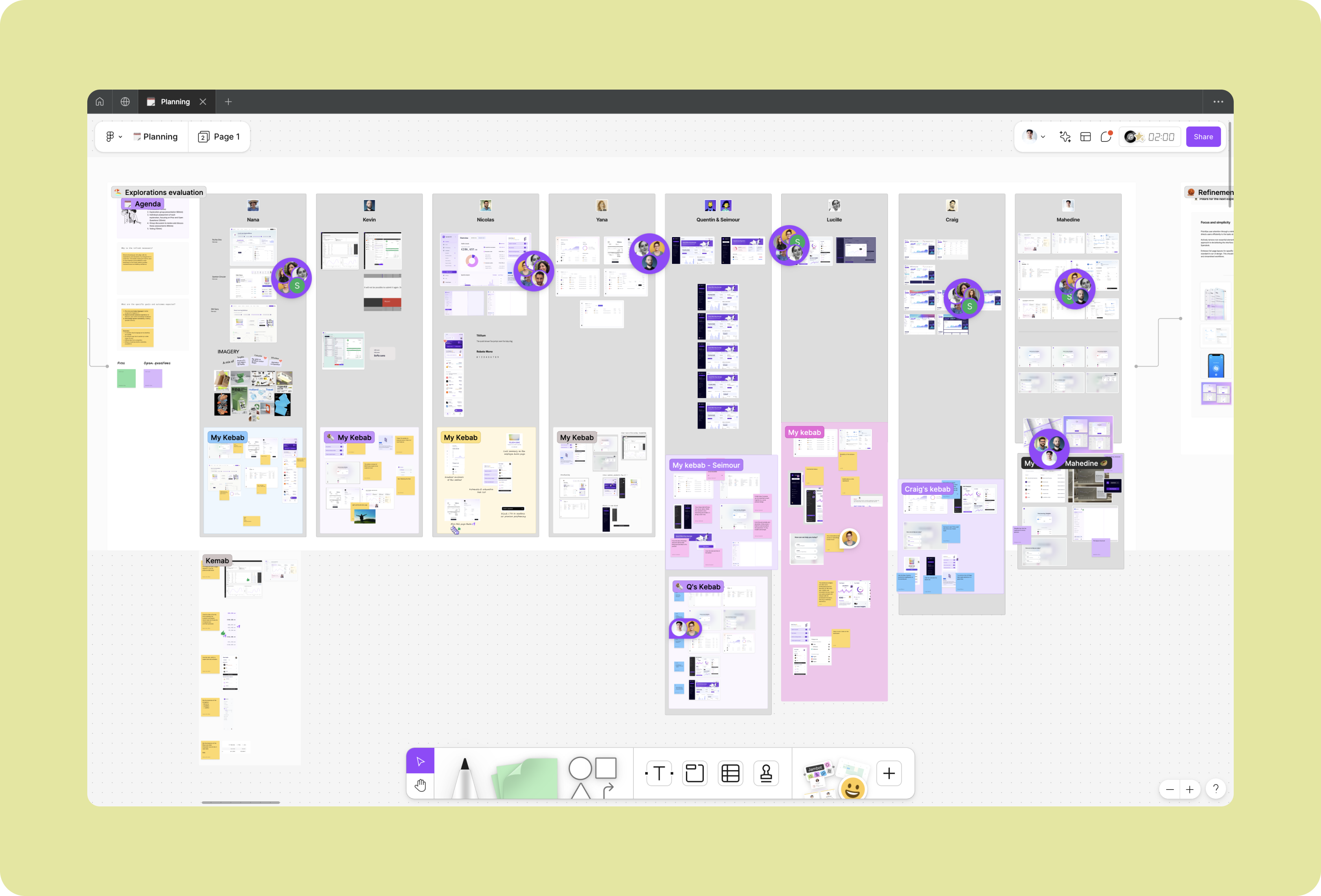
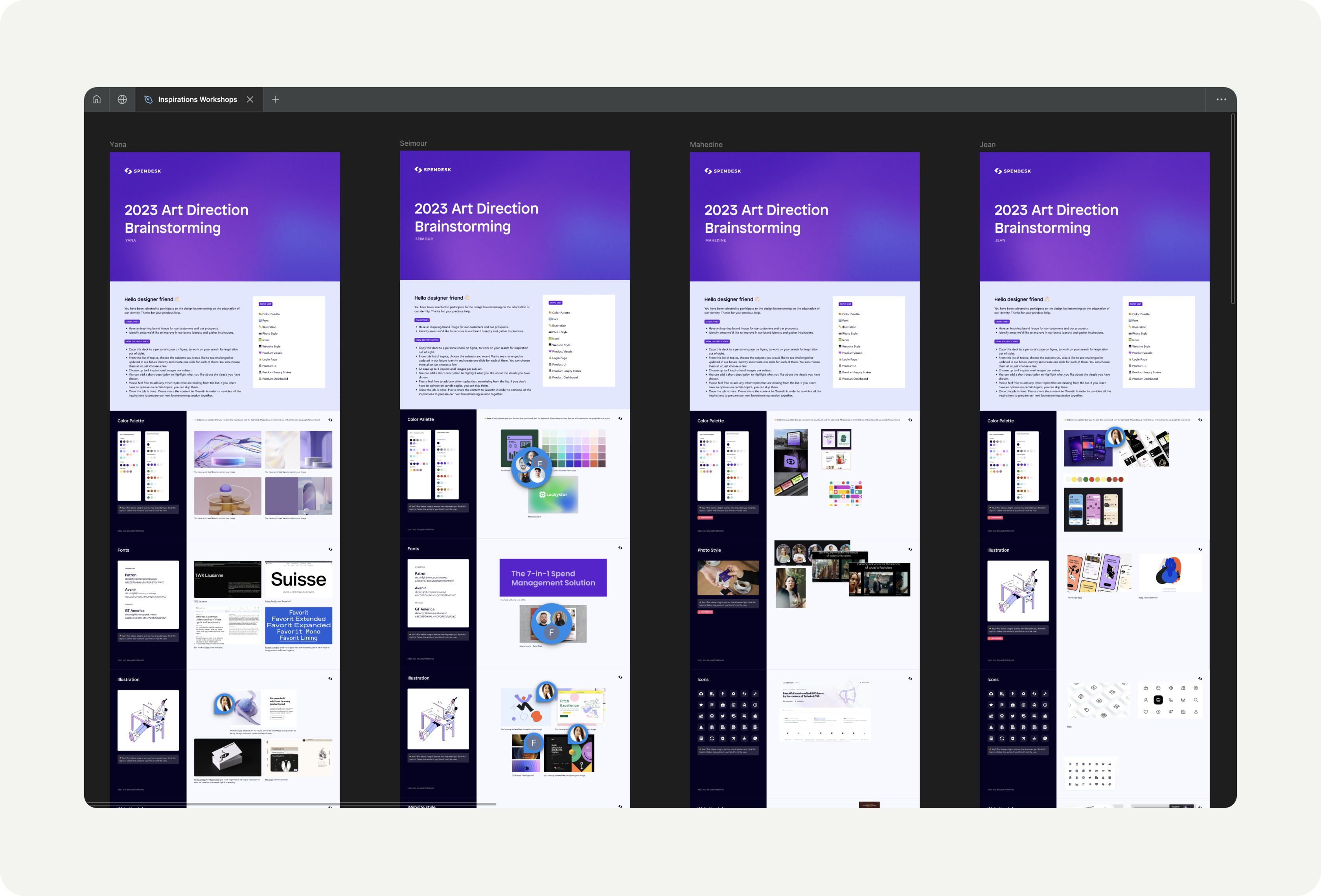
The transformation began with a workshop that brought together the brand and product design teams. Using Figma, they assessed what already existed and imagined the look and feel of the new Spendesk identity. The second workshop, held in FigJam, was a brainstorming session dedicated to brand attributes and a general identity refresh.
Brand, product, tech and marketing united around a common process
Since its creation, the brand team has been using Figma. "Seeing my team working together with people across different departments and geographies, collaborating and improving our process and creativity has been great. Figma was by far the best tool for this," says Quentin.
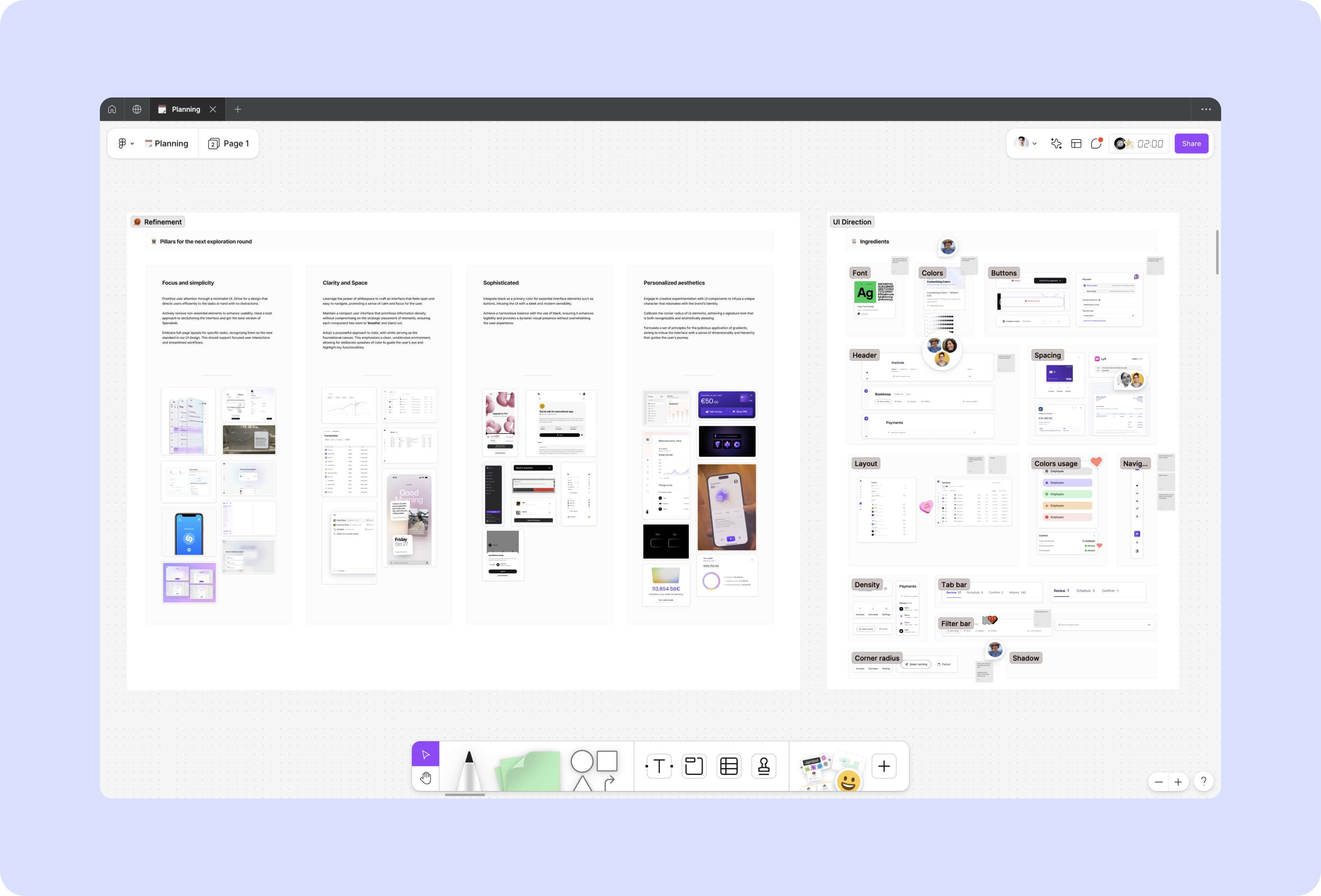
The rebranding was a cross-functional effort, informed by Spendesk’s core values, their new brand value proposition and a revamped website navigation focused on better user experience. For this major UI refresh, the teams had a goal in mind: serve customers better through a clearer, more accessible interface and more intuitive product discovery. To reach it, they held blue-sky brainstorming sessions and collected explorations that required everyone to think big without constraints. "Doing this work with FigJam and Figma made it much easier for the product and brand design teams to work together," recalls Mahedine Yahia, Head of Product Design.

Large-scale asset production
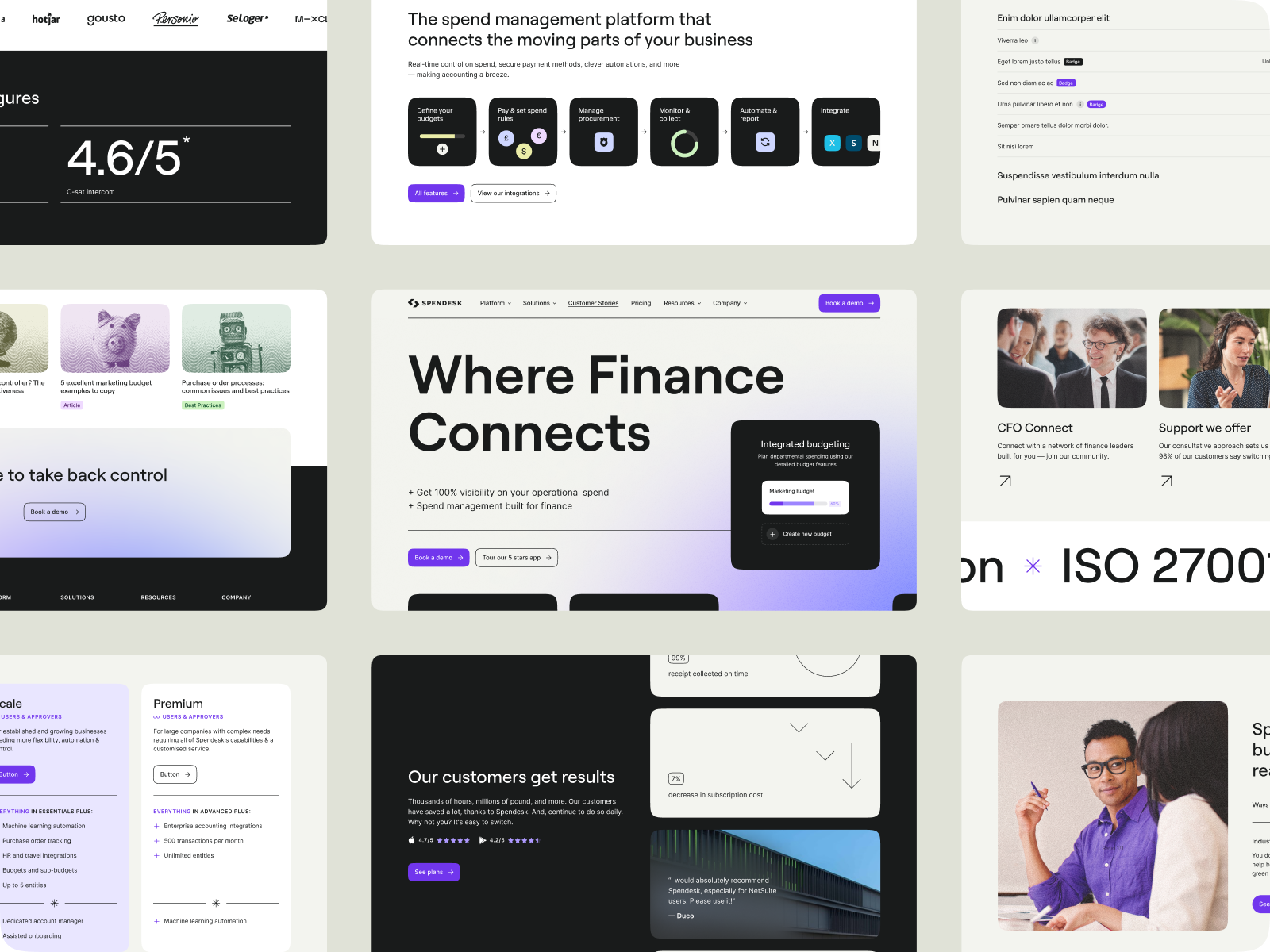
To maintain brand consistency, Spendesk's brand design team created Figma templates for marketers, allowing non-designers to update content while adhering to guidelines. "They could change ads or social media posts themselves. We just had to approve it. It saved everyone time," says Quentin. This combination of control and freedom allowed the brand design teams to work on complex problems, while marketing team members were empowered to create the assets they envisioned – a win-win.

Scalability through design system
With the UI refresh enabled by the formation of a dedicated design systems team, there was also an opportunity to increase alignment. The team worked hard to expand design system coverage, going from 67% to 99% in less than a year. Using Figma variables as design tokens, the design system is now ready to include dark mode.
There are now common libraries for both brand and product design, bringing together the common foundations of both teams, such as typography, colours and icons. The extraction of these new icons, whose redesign was led by Spendesk Brand Designer Seimour Darbandi, was then automated. It’s a solid foundation to ensure consistency across all platforms and a time saver for everyone involved in design and coding. For Marie-Aline Millot, Product Manager & Product Designer - Design System, “creating this system based on the Figma API (among other elements) will save many productivity hours for brand design, product design and engineers.”

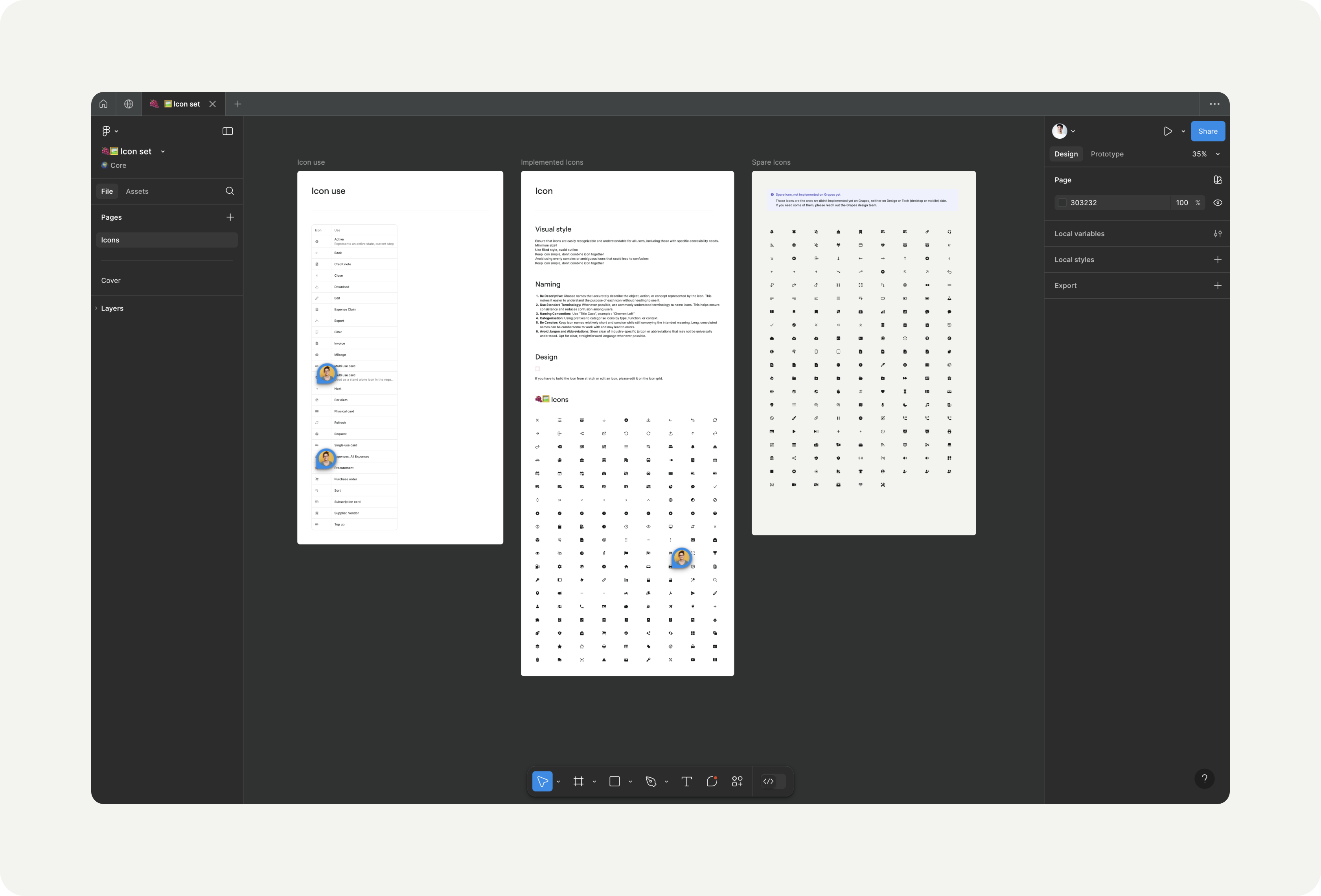
Dev Mode: the key to a smooth delivery
Once the new art direction was in place, the developers started to explore the designs using Dev Mode, which made collaborating with the designers much smoother. As the launch date approached, the feature helped to speed up the process and developers' use of Figma.
The redesign proved a success. As Front-end engineer - Design System, Thibaut Patois explains, “When the new UI was launched, the engineering team had a war room ready to fix the bugs - but there weren't any! I almost couldn’t believe it.” In the first two weeks, out of +30,000 logins, users sent only seven pieces of negative feedback.
Shared success and pride
This close collaboration between the brand design team and 100+ contributors across departments helped foster a culture of shared ownership and demonstrated what cross-functional teams can achieve.
Yana Sanzhapova, senior product designer, is pleased with this achievement: “I am very proud of the result. It was a team effort: design system, development, UI direction… I feel lucky to be surrounded by these amazing people.” A success celebrated by an Awwwards nomination in December 2024.

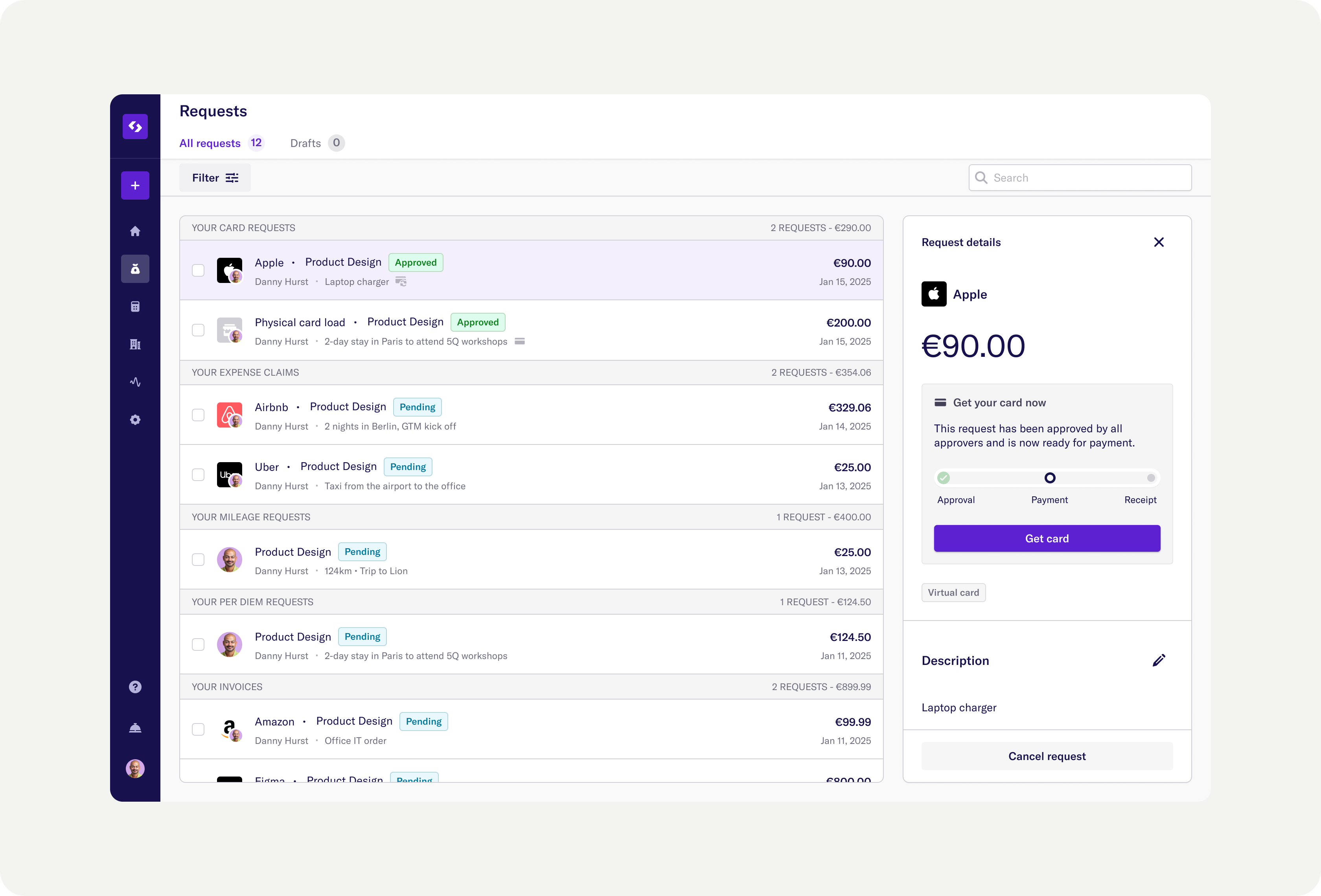

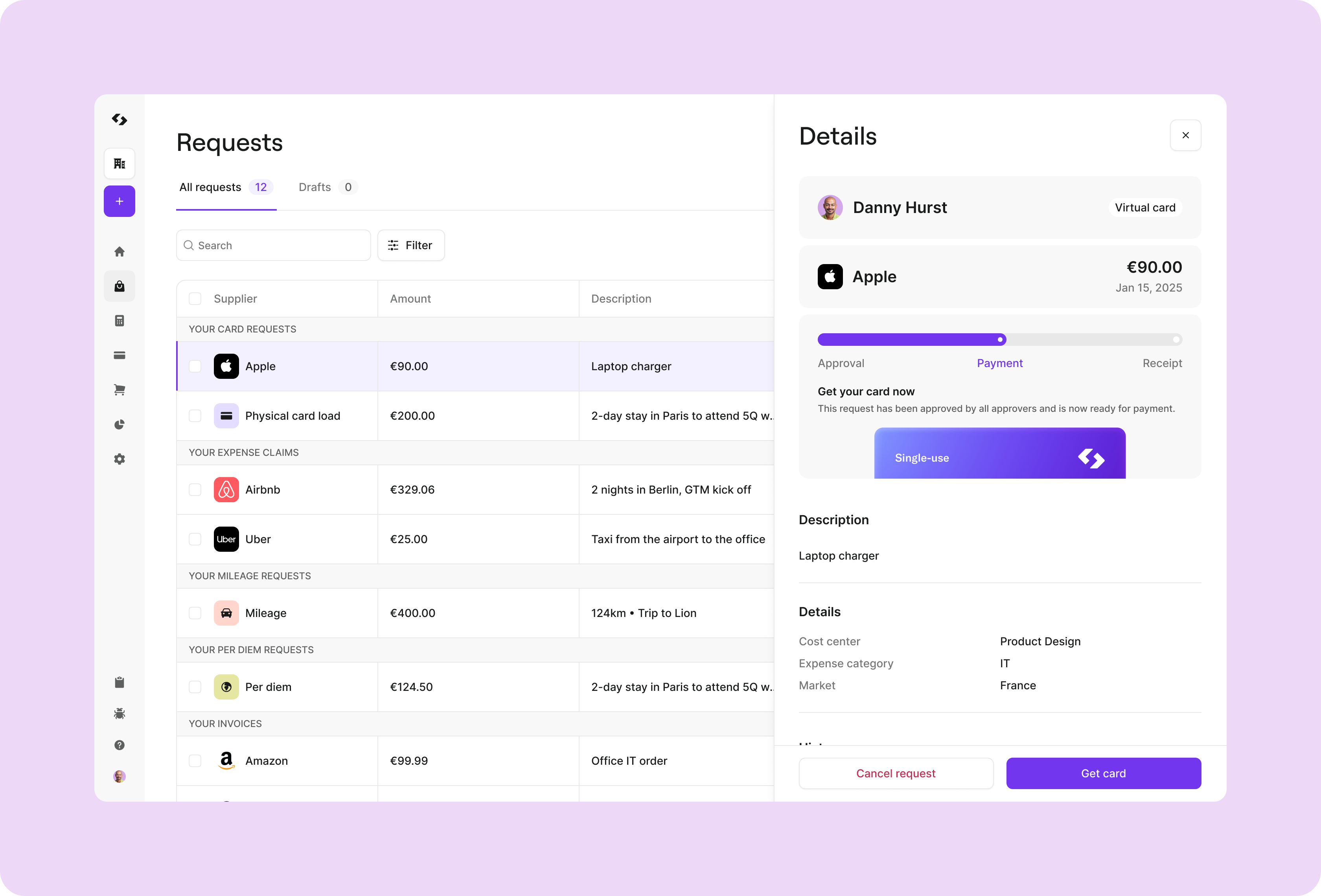
Since the teams at Spendesk were able to lead this ambitious redesign project while bringing together brand, product, tech and marketing, they have been able to rely on the cross-functional alignment found during the intense collaboration required by the process. The front-end team were already familiar with Figma tools and used Dev Mode to successfully implement the design teams' creations, strengthening their collaboration with product and marketing.
Last but not least, the powerful tools created during this project will make the creation and implementation of Spendesk's next graphic identity much easier, something the teams are already looking forward to.
See how Figma can help you scale design
Great design has the potential to differentiate your product and brand. But nothing great is made alone. Figma brings product teams together in a fast and more inclusive design workflow.
Get in touch to learn more about how Figma can help companies scale design.
We’ll cover how Figma can help:
- Bring every step of the design process—from ideation, to creation, to building designs—into one place
- Accelerate design workflows with shared company-wide design systems
- Foster inclusivity in the product team process with products that are web-based, accessible, and easy to use