
What matters when anyone can build




If AI can make anyone a product builder, the real edge is knowing what’s worth shipping.
Share What matters when anyone can build
Illustrations by Pedro Sanches
We grew up being told the future belonged to those who could code—that vision mattered, but the real advantage was knowing how to bring it to life.
That version of the future is fading, as the distance between imagination and reality has all but disappeared. Ideas now come to life at an astonishing pace, and in a dynamic world, that speed has become table stakes. But speed can create a false sense of progress. What if you’re moving quickly in the wrong direction? What if everyone is moving fast, but not together?
When anyone can ship, speed stops being what sets you apart. Direction does. The question is no longer just how to build, but what is worth building at all.
Choosing what’s worth building
Figuring out what’s actually worth building isn’t obvious. The space of possibilities is vast, and navigating it is as much art as method. A common trap, especially for newer builders, is latching onto the first idea and going deep. You refine, iterate, improve, but often you’re just hill-climbing locally, making path-dependent decisions without ever questioning the starting point.
Today’s tools make this dangerously easy: You can bring ideas to life instantly, often in isolation, with agents that are endlessly helpful and agreeable. They accelerate you forward but not beyond your first idea, making it easy to develop tunnel vision when no one is pulling you out of it. That’s not how you find the best idea.
More experienced builders, on the other hand, will tell you to go broad first: Map the option space into a high-level set of directions that are mutually exclusive and collectively exhaustive (“MECE”) to compare pros and cons. But this approach has its own failure mode: staying too abstract. A 2x2 or a set of wireframes are rarely enough to build real conviction. Seeing the end user experience before committing to a direction can feel like overkill, but it’s often the only way to build real conviction to know if an idea works.
The better way, the way you actually find the right idea, is to go broad and deep at the same time. AI now makes it possible to explore multiple directions in parallel while pushing each far enough to feel real. Instead of choosing one path, you generate several distinct directions and develop each into something concrete: not just ideas, but end-to-end experiences.
At Figma, this often means prompting our AI to produce multiple interactive prototypes, different takes on the same problem, laid out side by side. You invite teammates (and agents) in to react together, comparing not abstractions but real experiences, and building on each other’s ideas.
This points to a new way of working with AI, one that isn't siloed and sequential, but collective and in parallel.


Making it yours
Choosing the right direction gets you to something worth building. But when anyone can build and build quickly, everything drifts toward what’s typical, making “good enough” both easy to reach and easy to accept. AI will produce something that looks right at a glance, following patterns that are statistically likely to work but rarely deeply considered. If you don’t question them, those defaults quietly become your product. The result is a sea of products that feel interchangeable. And when everything works, people choose what feels intentional, what feels cared for.
The real failure mode isn’t lack of ability, but passivity: saying yes to the first suggestion, stopping when it looks right, moving on because it’s already “pretty good.” It’s understandable, as the outputs are designed to be convincing.
But craft is what separates the memorable from the merely functional. It’s active: choosing, not accepting. Revisiting and interrogating each decision, refining, removing, tightening, pushing past the first few versions until the work has a point of view. This isn’t about innate taste, but about exercising it through iteration, looking again, asking “is this actually right?”, and then making it so.
Craft is what separates the memorable from the merely functional. It’s active: choosing, not accepting.
As the baseline improves, the average will look increasingly polished. Standing out won’t come from tools or speed, but from how much care you’re willing to put in. In that world, the only way to stand out is to go further than what’s given and make something unmistakably yours.
What matters now
Speed, direction, and craft.
The best teams don’t trade these off—they move quickly, choose deliberately, and refine relentlessly. That’s what it takes to build something that actually stands out. Because when anything can be built, the only edge is in what you choose and how well you shape it.


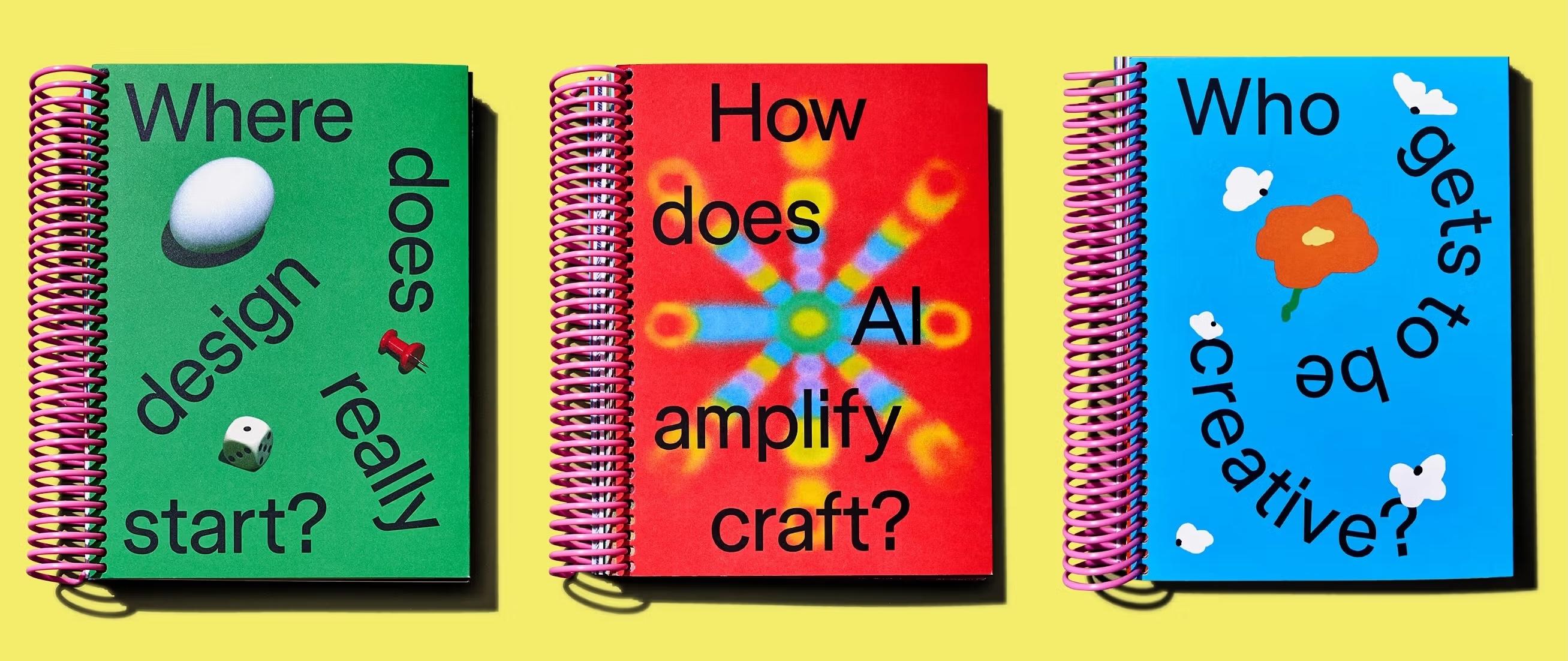
This article was featured in our annual print magazine, Start Anywhere. Explore the digital version, or purchase a copy.
Yuhki Yamashita is the Chief Product Officer at Figma, where he leads the product and design teams. Before joining Figma, he was at Uber for over 4 years, where he led the redesign of both the rider and driver apps. Prior to that, he was responsible for the YouTube app on iOS at Google.