Driving design transformation: How CARS24 builds faster with Figma
CARS24, India’s leading auto-tech platform, has rapidly evolved beyond car buying and selling to launch 8+ new businesses across geographies. To deliver consistent, high-quality experiences at scale, they turned to Figma as their single platform for design, prototyping, developer handoff, and collaboration.
This shift has transformed design from a function into an operational asset—driving speed, structure, and savings across the company. Within a year, CARS24 launched a scalable design system, accelerated product releases, and reduced engineering costs by nearly 30%. Front-end teams report a 20% boost in productivity, and with Design System V2 and Code Connect, the company is targeting an additional 15-20% cost reduction in the year ahead.
The challenge: Scaling design in a rapidly growing ecosystem
CARS24 is a pioneering auto-tech company operating in India, the UAE, and Australia, offering a complete suite of vehicle ownership services. With over 50 owned stores, 150+ franchise stores in India as well as 12+ business verticals, its product landscape is complex as it is expansive.
As the company expanded, the design and development process became increasingly fragmented. Teams worked in silos, and misalignments often happened across design, product, and marketing teams.
“Before Figma, everyone had their own way of doing things—their own dashboards, flows, even logins. We needed to bring it all together to create consistent experiences,” said Akshit Malhotra, AVP of Design at CARS24.
Centralising with Lego: CARS24's tokenised design system
To create consistency across 20+ business lines, CARS24 built Lego, an internal, tokenised design system hosted entirely on Figma. Lego introduced a shared visual language and patterns across teams, while maintaining flexibility for distinct brand and product needs. The team layered themed variants onto the core system to serve use cases like CFSPL (CARS24 Financial Services Private Limited, their NBFC subsidiary), CARS24 Orbit (a car management system for streamlining different aspects of vehicle ownership), and CARS24 New Cars (a digital platform providing a unified and transparent way to buy brand-new vehicles).

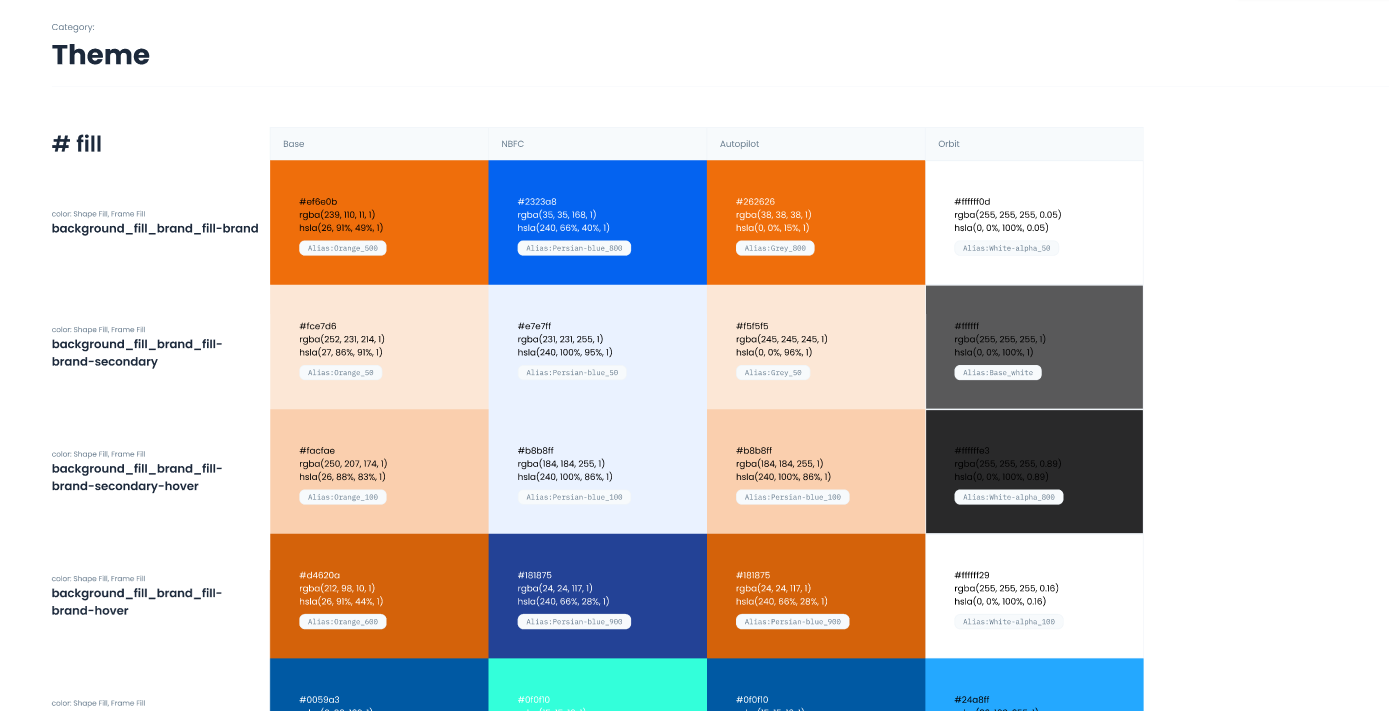
With Figma, we moved from scattered tools and siloed teams to one powerful platform. It eliminated confusion, improved clarity, and made collaboration between design, product, and tech seamless.
— Bibek Kumar, Senior Product Manager, CARS24
Currently, Lego powers over 70 designers and 120 developers across CARS24. It is now evolving into Design System V2, built on a light/dark model for broader adaptability and even easier maintenance.

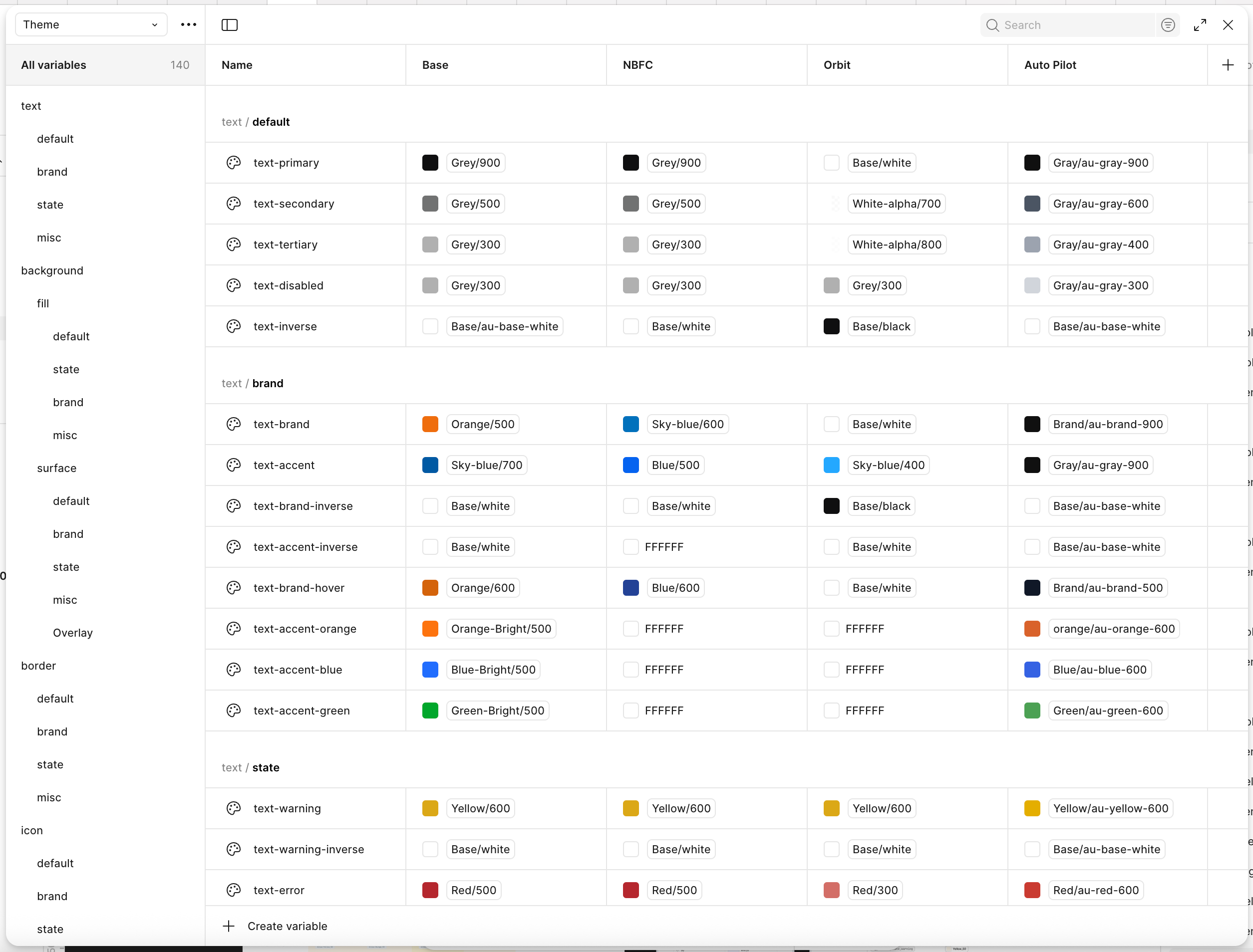
Enabling developer autonomy with Dev Mode and Code Connect
Figma’s Dev Mode introduced a new level of visibility and structure to the handoff process. Where developers once relied on Slack threads or screen recordings for clarification, they now inspect production-ready designs within Figma—accessing tokens, styles, and specifications seamlessly.
Crucially, the team’s disciplined use of tokenisation acts as a quality gate. Tokens have become the standard currency between design and development with a shared expectation. “If it’s not tokenised, it goes back to design. That’s the level of ownership now. Even our devs have built these tokens into their codebase,” said Aniket Pandey, Design System Lead at CARS24.

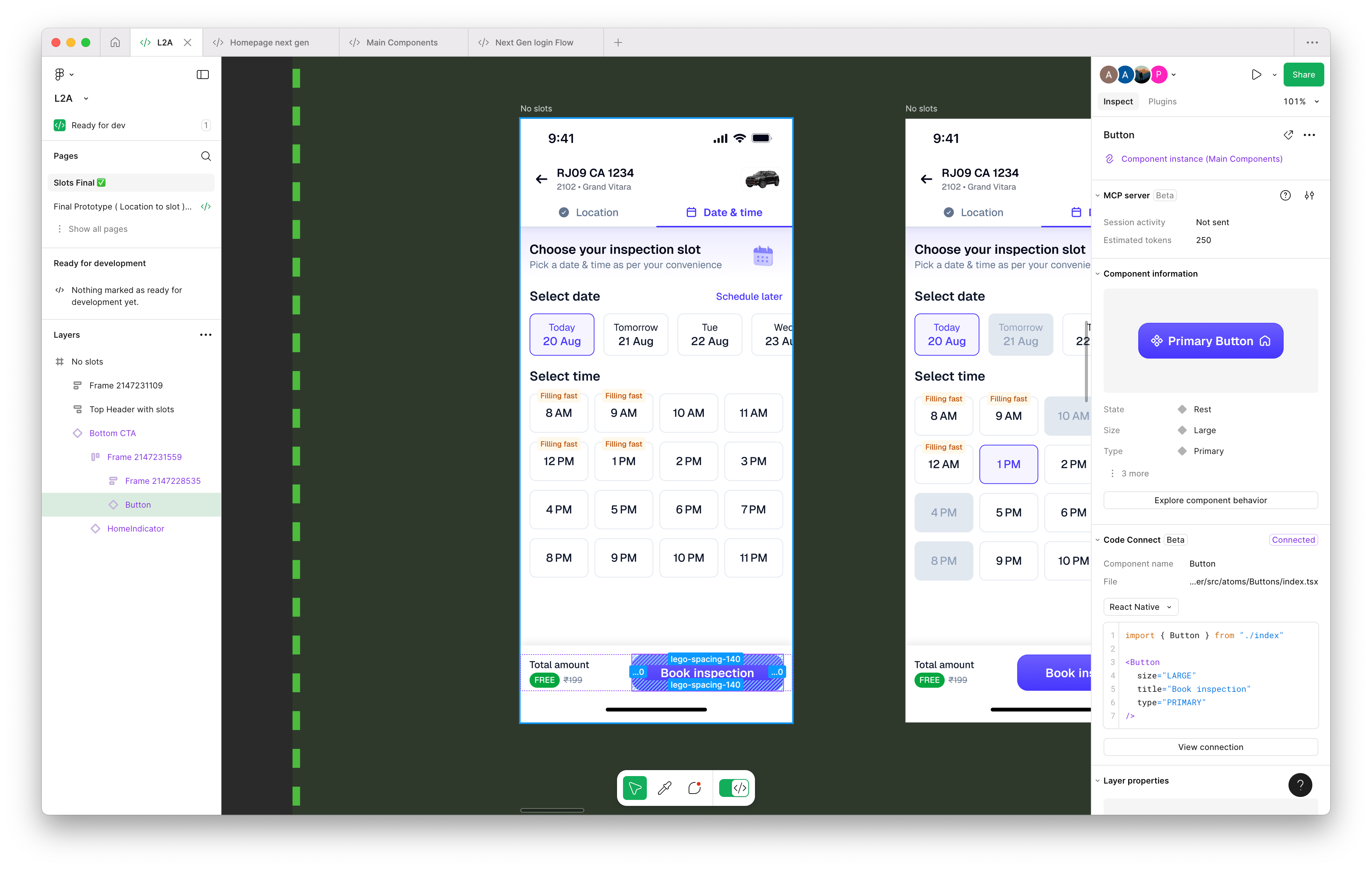
CARS24 has also begun rolling out Code Connect and Figma Make as part of its shift toward design-led prototyping. Designers now build realistic, interactive flows that simulate how users will actually engage with the product, giving developers a clearer understanding of logic, behaviour, and intent before a single line of code is written. As a result, teams spend less time debating vague requirements and more time refining actual experiences, leading to faster iterations, reduced QA cycles, and fewer surprises during implementation.
Instead of debating in abstract, we prototype early and get feedback on something real. That helps us close loops faster and reach better outcomes.
— Aniket Pandey, Design System Lead, CARS24
FigJam: From strategic rebranding to everyday rituals
During CARS24’s brand refresh, FigJam enabled alignment between co-founders, multiple agency partners, and functional teams across geographies. From early moodboards to the redesigning of 150+ stores, the entire brand refresh unfolded in FigJam.

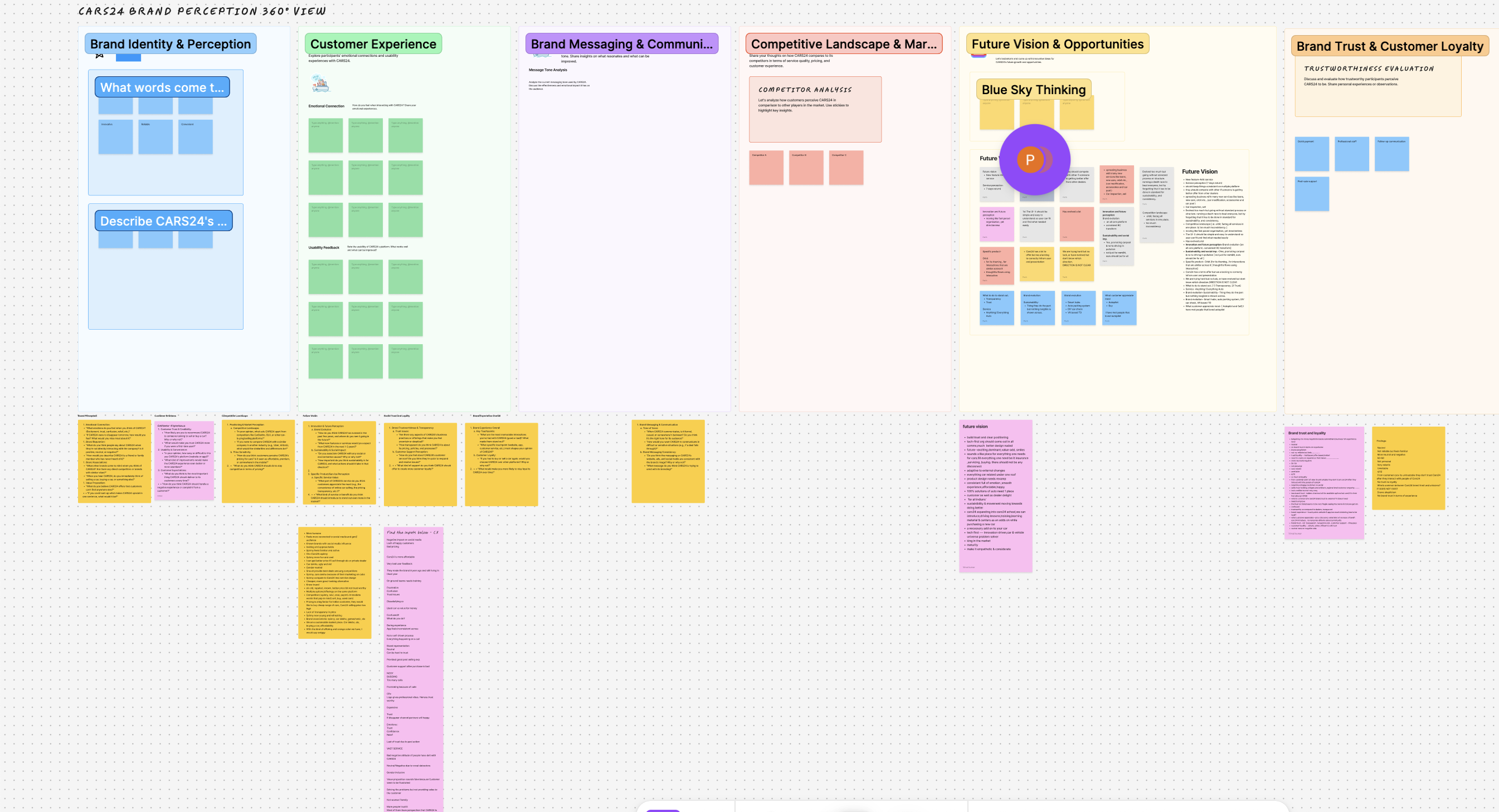
It also powers everyday workflows, like weekly Product Hour meetings, where teams analyse call recordings, capture CX insights, and add them directly to the roadmap. One such insight—a simple request for a call-back button in the Car Detail Page—led to a UI change that improved conversion by 12%.
Our researchers practically live on FigJam. From PMs to SEO to CX, everyone is using it to capture feedback, synthesise insights, and align faster.
— Akshit Malhotra, AVP, Design at CARS24
Building a cross-functional culture
Figma is now used actively by PMs, researchers, SEO specialists, developers, motion designers, content writers, and even business stakeholders, in addition to the core design team at CARS24. What sets this practice apart is not just access, but fluency. New hires are onboarded into Figma early, and non-design teams are encouraged to leave contextual feedback or build on existing components for rapid experimentation. Even the CEO actively engages with design files, with this cross-functional culture shift resulting in sharper feedback and faster alignment.
AI, plugins and the road ahead
Looking ahead, CARS24 is exploring how AI and automation can accelerate workflows, from auto-generating themes and powering automated prototypes to enabling marketing teams to self-serve campaign assets. They are also integrating Figma with Cursor to speed up layout design and component iteration, while experimenting with new MCP APIs to increase velocity without sacrificing quality.
Adoption takes effort. But once teams align and centralise design, the payoff is enormous. You’re not just solving for today, you’re building a system that scales with your company’s ambitions.
— Akshit Malhotra, AVP, Design, CARS24
The long-term goal is full design self-sufficiency: teams capable of shipping new pages, campaigns, and experiments without frontend bottlenecks. With Figma powering its workflows, design is no longer a supporting function, but a driver of speed, savings, and scale across the company.
See how Figma can help you scale design
Get in touch to learn more about how Figma can help companies scale design.
See how Figma can help you scale design
Great design has the potential to differentiate your product and brand. But nothing great is made alone. Figma brings product teams together in a fast and more inclusive design workflow.
Get in touch to learn more about how Figma can help companies scale design.
We’ll cover how Figma can help:
- Bring every step of the design process—from ideation, to creation, to building designs—into one place
- Accelerate design workflows with shared company-wide design systems
- Foster inclusivity in the product team process with products that are web-based, accessible, and easy to use