How Chello streamlines delivery across clients and continents with Figma
Chello is a full-service creative agency based in Sydney and London, partnering with start-ups and global brands across brand strategy and expression, creative and campaign development, and content production.

Today, Chello runs 99% of their work on Figma, spanning strategy, design, production, and client services. Figma has become the agency’s delivery system: a repeatable way to ramp teams quickly, collaborate with clients in shared spaces, and ship work consistently across regions and time zones.
That operating rhythm helped Chello to scale internationally, supporting their UK expansion, and enabling a newly established two-person team to deliver 20 projects in just two months.
With Figma, Chello was able to:
- Facilitate better client collaboration
- Reduce turnaround time for specific projects by 62%
- Cut production times for initial builds from 3 hours to an hour
- Streamline cross-functional workflows
- Expand creative range and reduce manual lift
- Improve the onboarding experience for new team members
Challenge: The cost of context switching
Before Figma, Chello’s workflow required switching between platforms and tools. The cost wasn’t just inconvenience, it was operational drag: fragmented feedback, friction at every handoff, and repeated exports to deliver “final” work.
Onboarding was another bottleneck. Bringing in new hires and freelancers meant manually sharing files, fonts, and guidelines, often with little standardisation.
With a growing team, the need for a unified, fast-moving, and fully synced workplace became impossible to ignore.
Solution: Figma as Chello’s agency operating system
Adopting Figma became Chello’s operational backbone for scaling growth. “You can have an entire project from research all the way to delivery in Figma. Teams spend less time chasing files and more time delivering outcomes. It just becomes a lot tighter and faster,” says Tristan Velasco, Co-founder and Executive Creative Director at Chello.
Each client has a dedicated workspace, with live design systems, up-to-date guidelines and brand assets that evolve in real time, creating a dependable single source of truth for everyone.

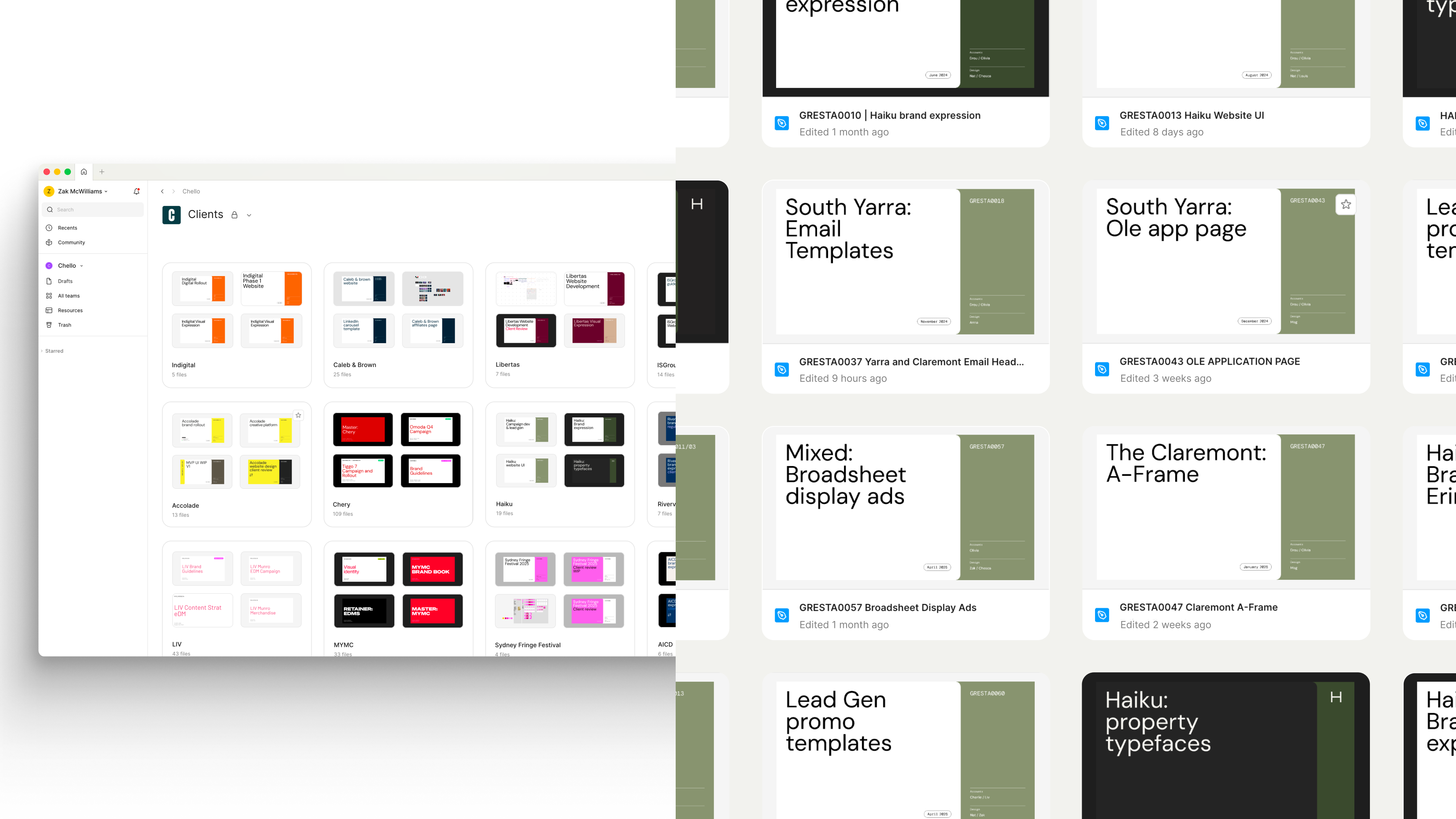
Chello uses Figma to deliver at scale:
- FigJam: Used for early scoping, discovery, and workshops with clients. Custom templates align teams quickly, encourage real-time collaboration, and build early buy-in, saving time later in the process.
- Figma Design: Powers end-to-end execution with interactive prototypes, living design systems, and reusable templates. It replaces static reports, allowing faster and more flexible delivery.
- Figma Slides: Centralises creative and client collaboration in one interactive space. Templated decks house creative, copy, and admin links with clear status labelling, so teams can move from idea to approval without switching platforms.
- Connected Projects: Keeps clients in sync across all regions. Supports seamless collaboration, faster approvals, and easy scaling with shared libraries, toolkits, and up-to-date brand assets.
- Figma Make: Automates manual tasks and enables smarter workflows—like website scoping and visual generation—freeing the team to focus on strategy. It’s also fostering a more interdisciplinary culture where creatives explore beyond traditional roles.
I remember the days of versions and PDFs. Things were constantly lost because there was no single source of truth. Figma has fundamentally changed the way we work by bringing everything in one place.
— Tristan Velasco, Co-founder and Executive Creative Director, Chello
Eliminating onboarding friction with design systems
When Chello opened its UK office, the APAC team’s existing Figma foundations made it easy to duplicate the setup and get new teams productive quickly.
“New staff members had to understand Chello, get onboarded onto a new brand, and then there are processes to learn on top of that—it’s a lot. Having foundations within Figma that already worked was one big tick,” says Natalie Wong, Associate Creative Director at Chello.

Instead of relying on static PDFs or decks, Chello uses Figma Design to build living brand systems. These are typically housed in shared design files or libraries within dedicated Figma teams, providing both internal teams and clients with access to the latest guidelines, assets, and watchouts in one place. Because everything is live and centrally managed, updates are instant. Just share a link, and everyone’s looking at the same source of truth.
This setup improves alignment and onboarding, making it easy for anyone—new hires, freelancers, or clients—to jump in and hit the ground running.
It’s just a lot easier to have one source of truth we can easily update, and that will automatically push any updates to the link they already have without having to reshare it or exporting out a PDF.
— Natalie Wong, Associate Creative Director, Chello
A zero-bottleneck environment with Klaviyo
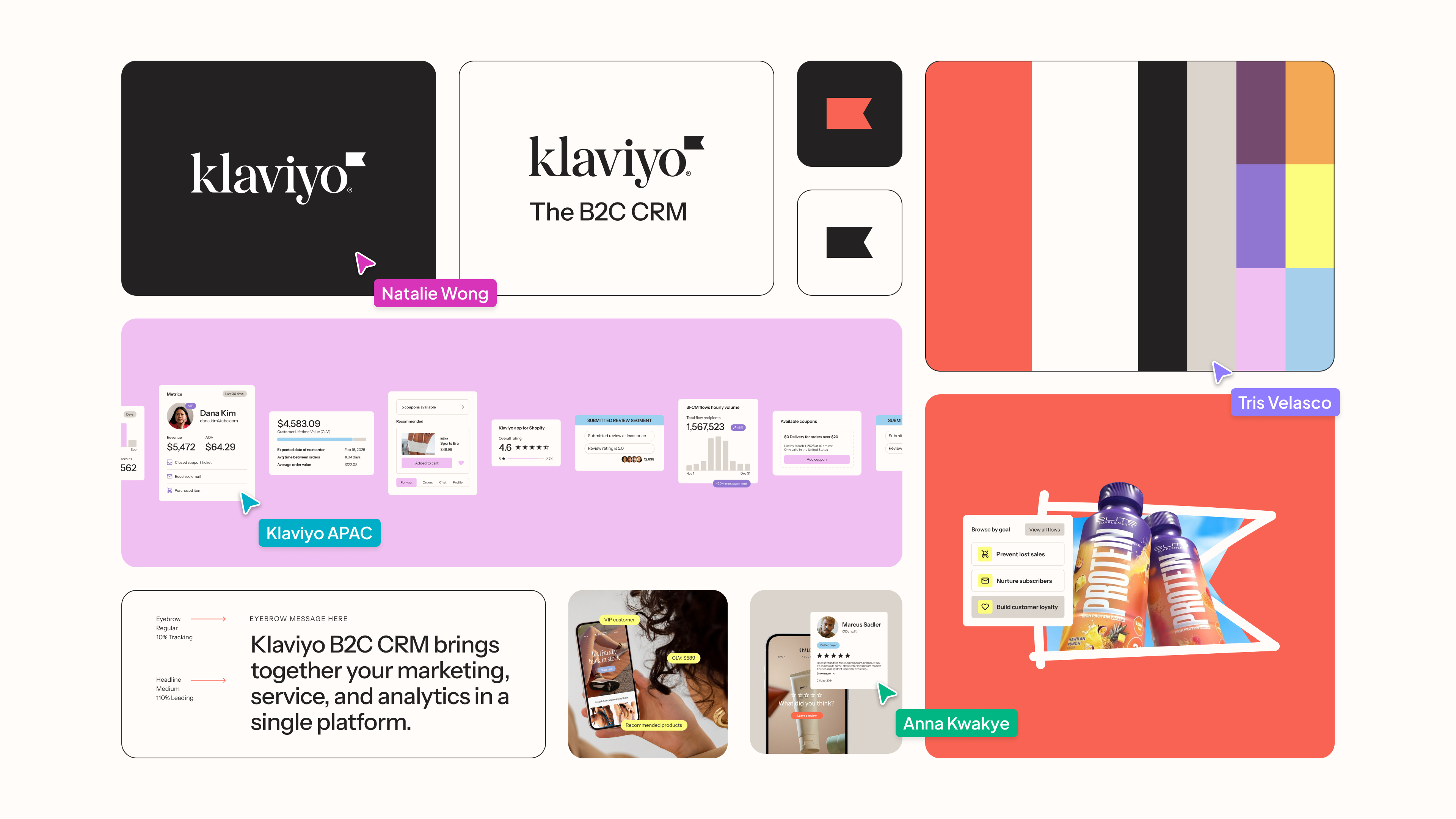
Chello used Figma to scale their work with marketing automation company Klaviyo across regions, duplicating internal systems built for the APAC account to support delivery for EMEA. This created a seamless day-and-night workflow across time zones.
Using Connected Projects, Klaviyo’s EMEA team can make small changes—like swapping a CTA or headline—without waiting on the Chello APAC team. Edits happen asynchronously, with Chello’s APAC team often delivering while Klaviyo’s EMEA team is offline. Klaviyo’s design team can also drop in assets or drafts, and Chello picks them up to roll out campaigns without back-and-forth or file duplication.
“As a Figma-centric organisation, we’ve been able to harness Figma’s AI and automation features to enhance how Klaviyo and Chello work better, together. We’re able to move faster across time zones without sacrificing brand integrity,” says Nathaniel Eberle, VP Brand, Creative and Events at Klaviyo.
The team also use Figma Slides to share everything with Klaviyo—from large-scale brand campaigns and events to day-to-day BAU updates. Interactive, templated decks act as master documents for creative and copy, with quick links to pipeline and dispatch sheets built in. Clear status labelling lets any team member track where assets sit in the product and approval process. This streamlines feedback, reduces platform switching and accelerates approvals.
Chello developed a “Klaviyo funnel system” to streamline their process and reduce turnaround times by approximately 62%, cutting a full funnel set from 1 hour 20 minutes down to just 30–40 minutes. Built across Figma Design, Figma Make, and AI beta features, the system connects strategy, creative and production in a seamless workflow by turning repeatable campaign tasks into a scalable delivery engine.
To extend that efficiency further, Chello plans to use Figma Buzz to create digital ad templates, speeding up resizing, simplifying campaign management, and enabling small copy updates without extra lift.
Aligning on global brand vision with Shopify
Chello also uses Connected Projects to create shared Figma workspaces for long-term clients like Shopify, supporting fast APAC localisation while staying tightly aligned to Shopify’s global brand vision. With an always-on workspace, both teams can collaborate in real time or asynchronously across time zones, reducing handoff friction and keeping work moving.

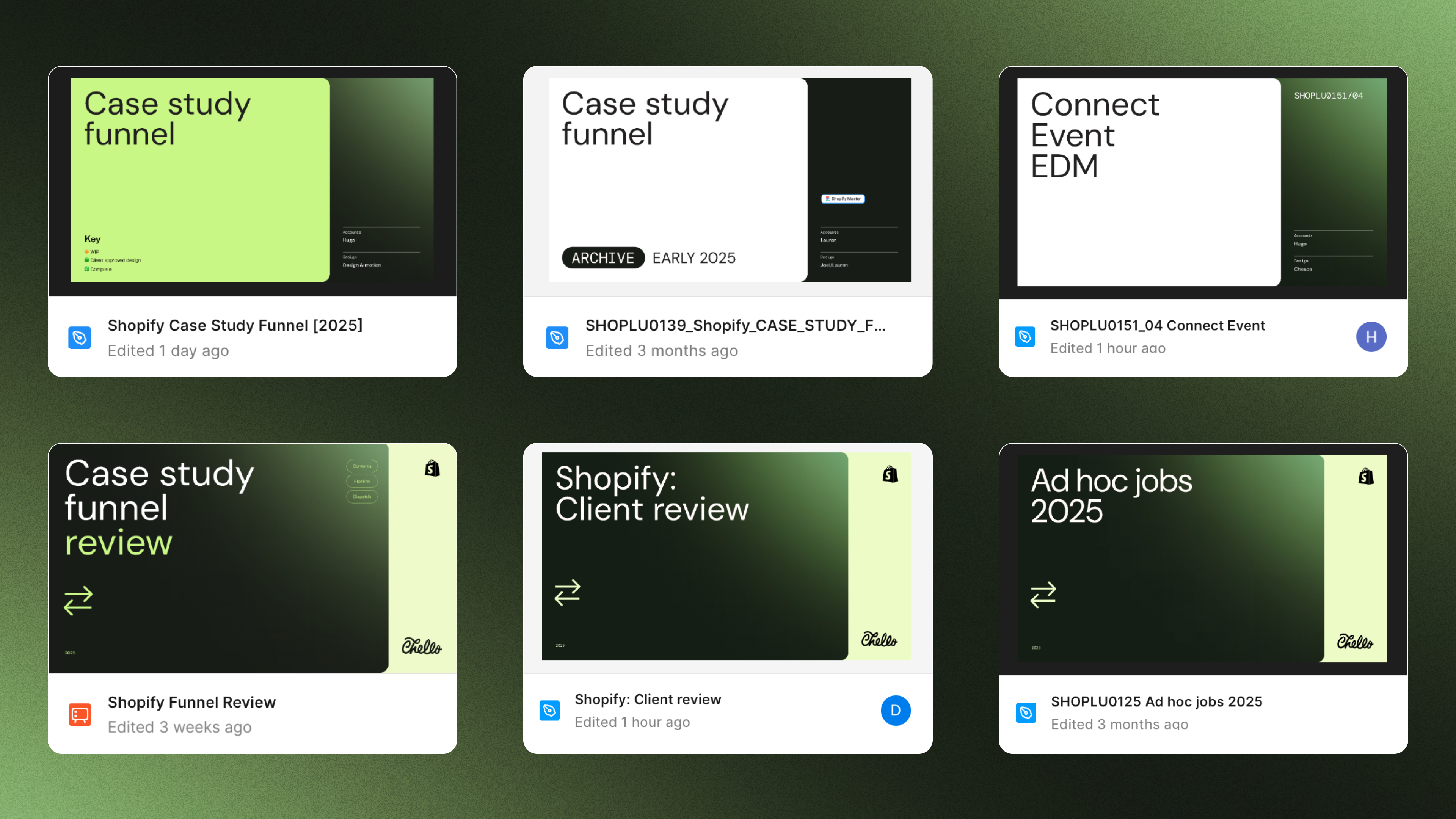
“On the client side, all their team members have access to Figma, so we were able to collaborate seamlessly,” says Tristan. It shortened the project cycle from brief to live date and helped Chello scale Shopify’s brand with confidence.
With Connected Projects, Figma became a dynamic home for client-specific assets—complete with fonts, colours, and hex codes baked directly into dedicated Figma teams. Everything is preloaded at a team level, so when anyone opens a design file, the right tools, styles, and systems are already in place.
FigJam as a space for structured creativity

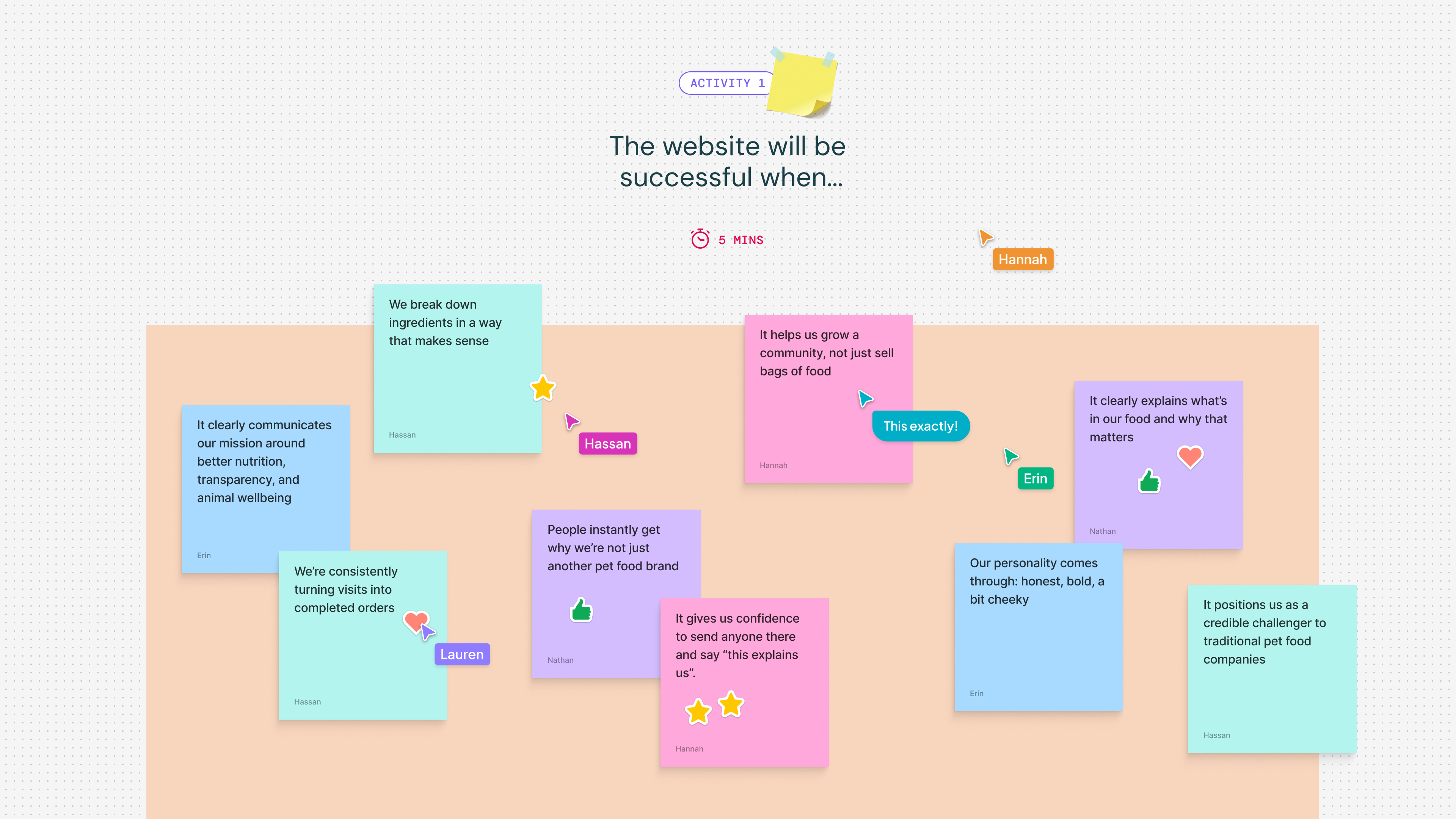
Chello uses FigJam as a foundational tool for scoping, collaboration, and alignment for complex website projects and client workshops. Through website scoping workshops, Chello and their clients can explore architecture, content, and strategy together in real time. Clients contribute by adding sticky notes. This direct participation boosts client buy-in by creating a strong sense of ownership from the start.
In one scoping session, a participant called it the “best workshop to date”. “We couldn’t have had the same kind of experience if we didn’t have FigJam,” notes Natalie.
Once site architecture is built out, the work transitions into Figma Design. This process keeps everything in one connected workflow, reducing context switching and keeping teams aligned at every stage.

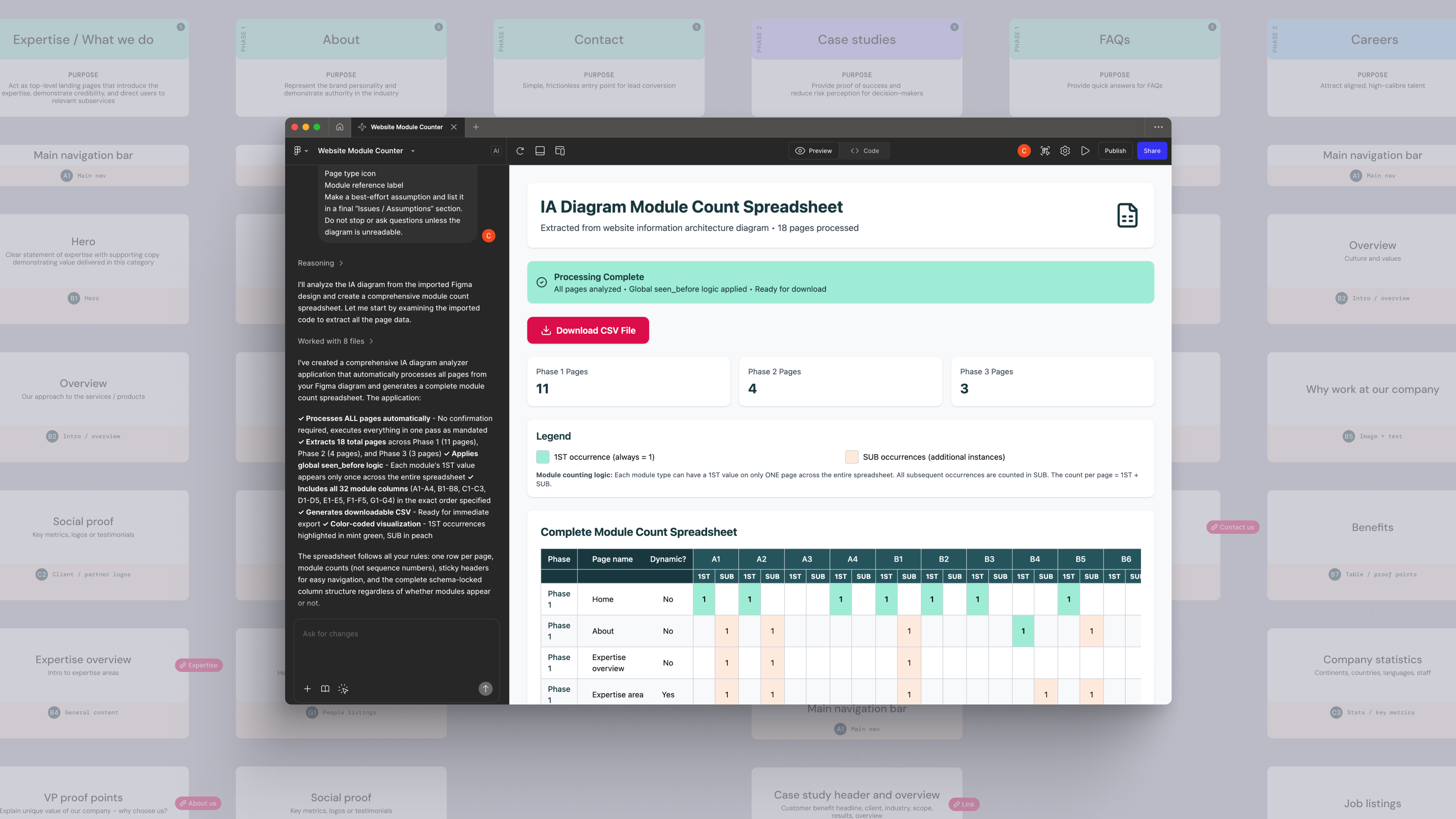
The beauty is that the entire project’s in Figma. So you've got research to strategy all the way through deliverables.
— Tristan Velasco, Co-founder and Executive Creative Director, Chello
Expanding horizons with Figma Make
Figma Make’s AI-powered design tools let Chello dabble in their more experimental side, opening doors to a more ideas-led, interdisciplinary creative culture. Senior creatives are already using the tool to speed up production and expand creative range.
One of Chello’s design leads created a tool with variable sliders that generates brand-specific visuals, cutting what would have taken three hours for an initial build and 30 minutes per iteration, down to about an hour to set up, with new variations generated in seconds. The team is also testing Make for website scoping and analysing site architecture to estimate design timelines. This allows them to scope more accurately and automates a typically manual, time-consuming step.
In many ways, Figma Make has allowed the team to reduce manual lift and bring creative ideas to life more easily. They’re empowered to push beyond the boundaries of their traditional roles, driving faster output and fostering a more interdisciplinary, adaptable team culture.
The Chello team has also taken it a step further by running AI training sessions to build confidence across roles and establish a shared foundation, to help the team become more interdisciplinary, with designers exploring motion work and copywriters trying their hand at creating things.
“As skills start to intersect more, I think we’ll get better at speaking the same language. Ideas will feel less abstract because we can turn them into something more tangible,” says Tristan.
Building a broader, bolder, and brand-led future with Figma
Chello describes Figma as more than a set of tools. It’s how they align, build, and ship together at speed.
We shaped Figma to fit our workflow early on. Seeing how it’s grown to meet agencies like ours, it feels like it’s evolved into something bigger. It’s become an operating system where we can align, build, and ship faster together.
— Tristan Velasco, Co-founder and Executive Creative Director, Chello
For a modern agency juggling clients, teams, and time zones, that operating system translates into business impact: faster ramp for teams, smoother client collaboration, and higher delivery capacity.
Today, Figma is powering a broader, bolder vision, one that’s more brand-led, more cross-disciplinary, and more aligned with how modern creative teams actually work.
See how Figma can help you scale design
Get in touch to learn more about how Figma can help companies scale design.
See how Figma can help you scale design
Great design has the potential to differentiate your product and brand. But nothing great is made alone. Figma brings product teams together in a fast and more inclusive design workflow.
Get in touch to learn more about how Figma can help companies scale design.
We’ll cover how Figma can help:
- Bring every step of the design process—from ideation, to creation, to building designs—into one place
- Accelerate design workflows with shared company-wide design systems
- Foster inclusivity in the product team process with products that are web-based, accessible, and easy to use