How Shakers uses Figma to align teams, accelerate delivery, and elevate craft
Shakers is a Madrid-based workforce orchestration platform connecting high-end tech freelance talents with global companies to deliver complex, high-impact projects. Founded in 2021, it now has +600 collaborators and operates in all of Europe. At Shakers, the product development process is defined by a culture of alignment, speed, and clarity. By integrating their entire workflow into a single ecosystem, the team has shifted design from a siloed activity into a collaborative engine that drives the entire company forward.
A foundation of alignment: the product trio
A shared vision
The Shakers journey begins with a close-knit collaboration between product management, design, and engineering. By involving all three disciplines from the very beginning, they ensure that everyone understands the problem and objectives before a single pixel is moved. This early alignment reduces misunderstandings and ensures that the final solution covers all necessary edge cases.
The team operates using a framework called “velocities”. The first velocity focuses on thinking and researching the problem; the second is dedicated to execution; and the third involves iterating on the solution. Instead of aiming for perfection at the start, they prioritize clarity and progress, allowing the design to reach high levels of quality over time.
Building everything in the same language is exactly what helps us move fast. When designers and engineers are using the same naming properties and components, the handoff is almost frictionless. That makes us much quicker.
— Belén Beneyto, Lead Manager of Product Designers
Figma as the source of truth
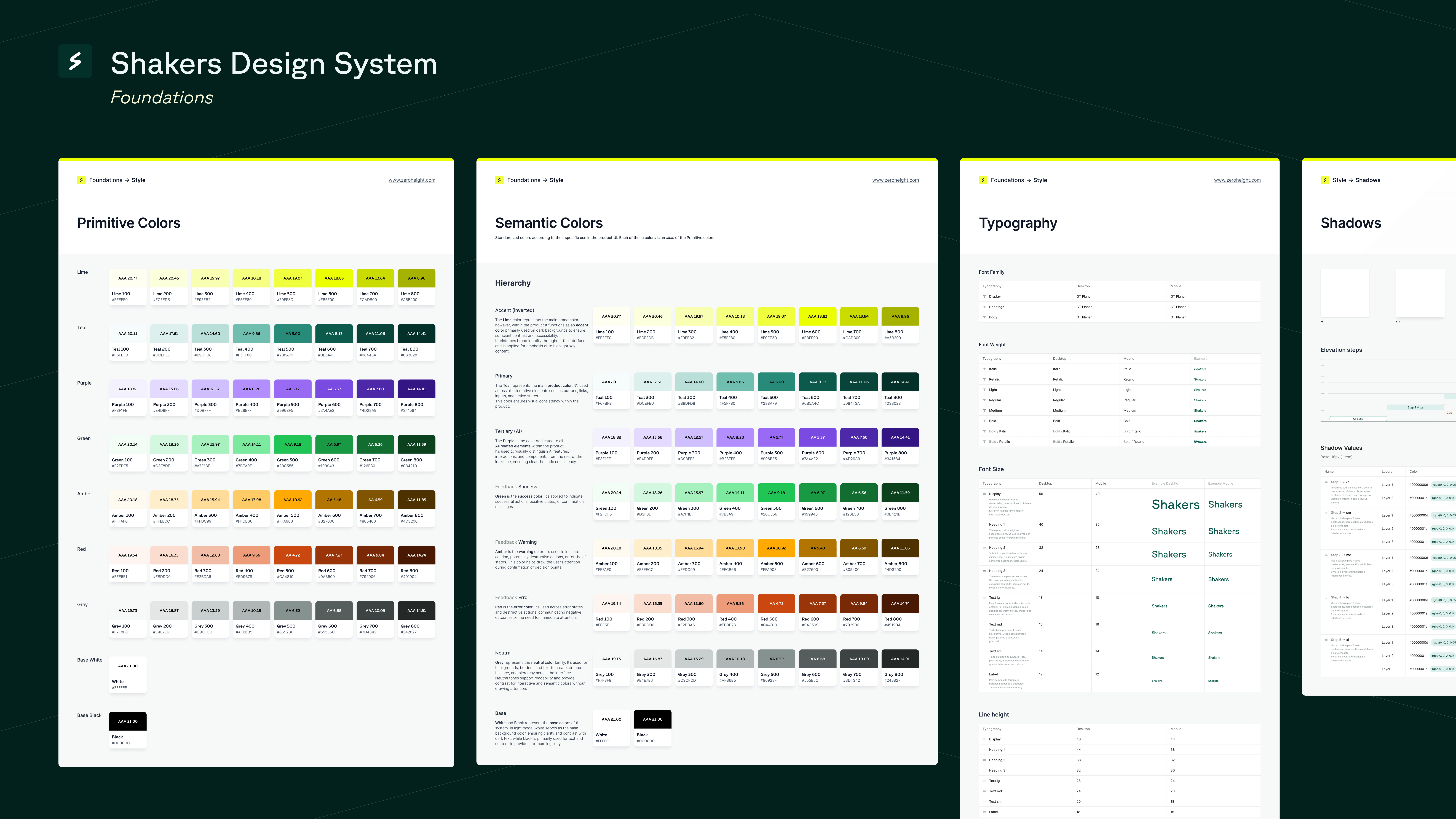
For the Shakers team, Figma serves as the definitive source of truth where everything happens, from early exploration to the final developer handoff. This centralized environment allows stakeholders, including C-level executives and marketing teams, to stay informed and aligned through every stage of the product lifecycle.

Safe collaboration through branching
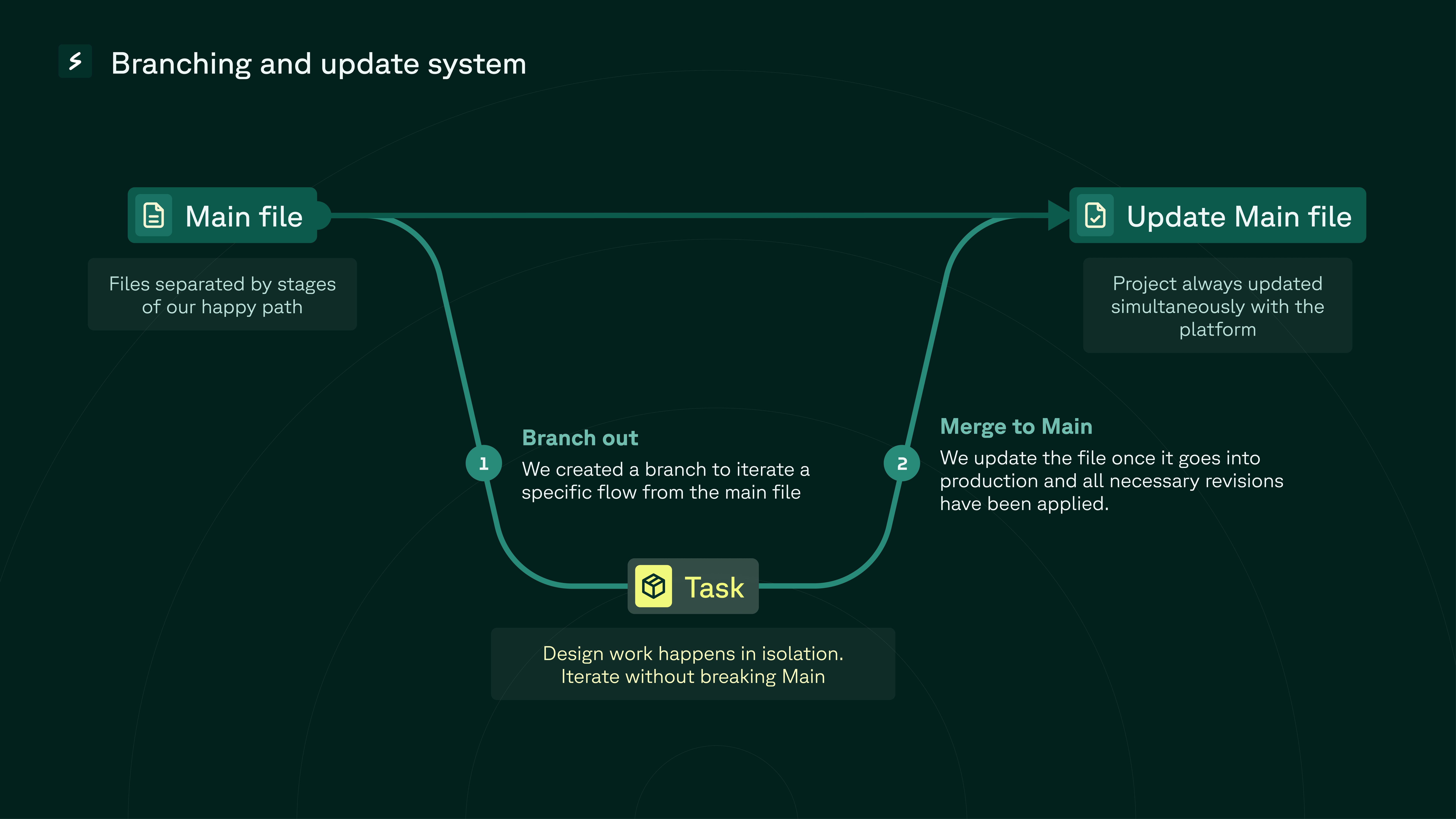
Managing a large-scale product across multiple squads is made possible through branching. This allows different teams to work on the same files safely, testing new approaches in a branch before merging validated solutions back into the main source of truth to keep the production files clean and updated.

Accelerating delivery: from ideation to prototyping
Discovery and sketching in FigJam
At Shakers, early-stage discovery relies heavily on FigJam for client workshops and internal brainstorming, whether for running them or processing the output using its AI-powered capabilities. Product managers use FigJam to organise interview notes and draw initial flows, creating a bridge between abstract ideas and final features. They also use FigJam to hold meetings and collaborate with various stakeholders, such as C-suite executives and marketing teams, taking advantage of its tools to visualise concepts.
Rapid validation with Figma Make
To speed up the validation of business logic, product managers have adopted Figma Make to generate mid-fidelity prototypes directly for their product requirements documents (PRDs). This allows the team to experiment with multiple versions of a layout and get rapid stakeholder approval on the core elements before moving to high-fidelity design. This approach was found to be efficient during the last redesign of the talents’ homepage, as it enabled all the teams to align on the components required.

Streamlining design-dev collaboration with Dev Mode
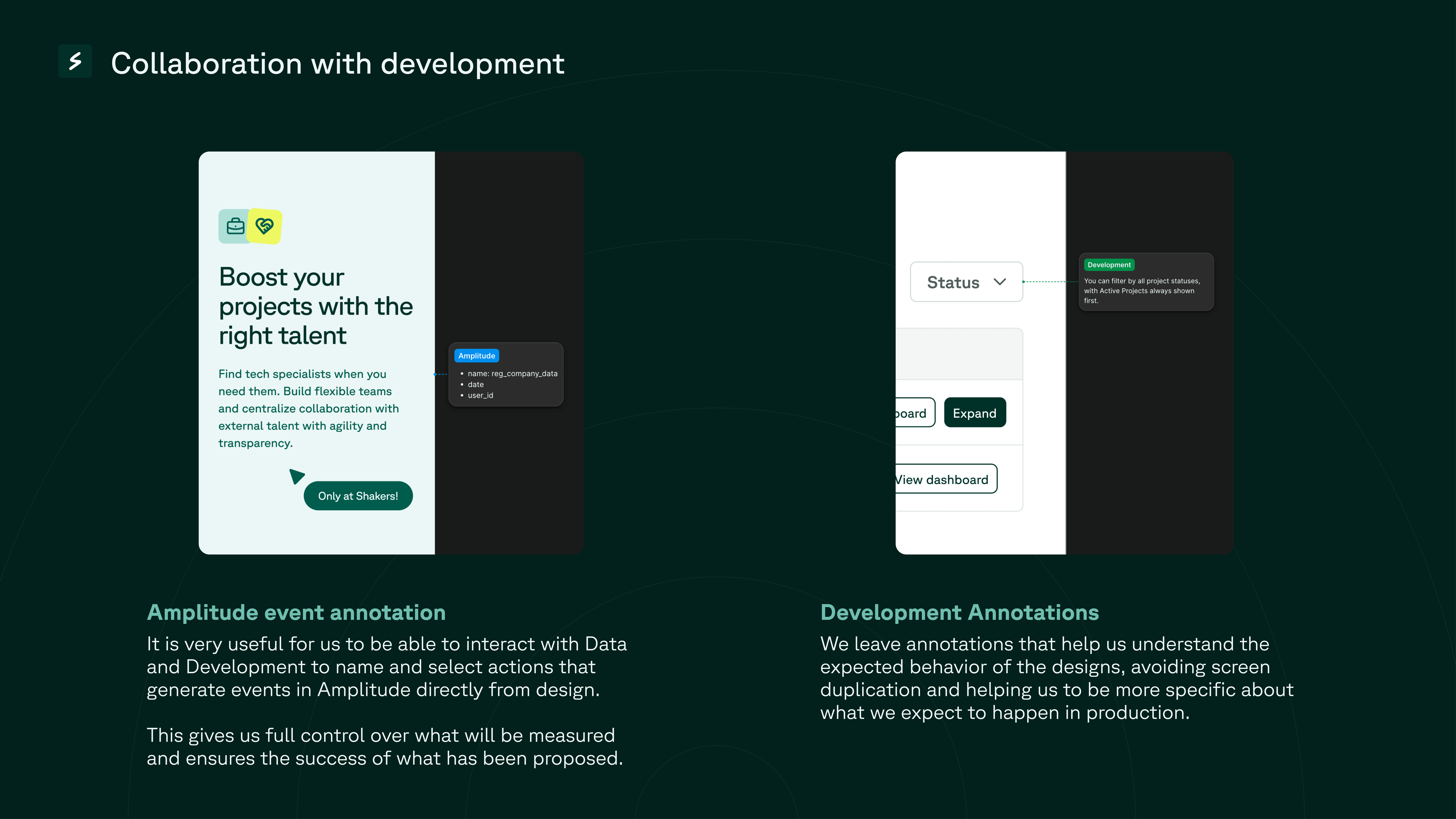
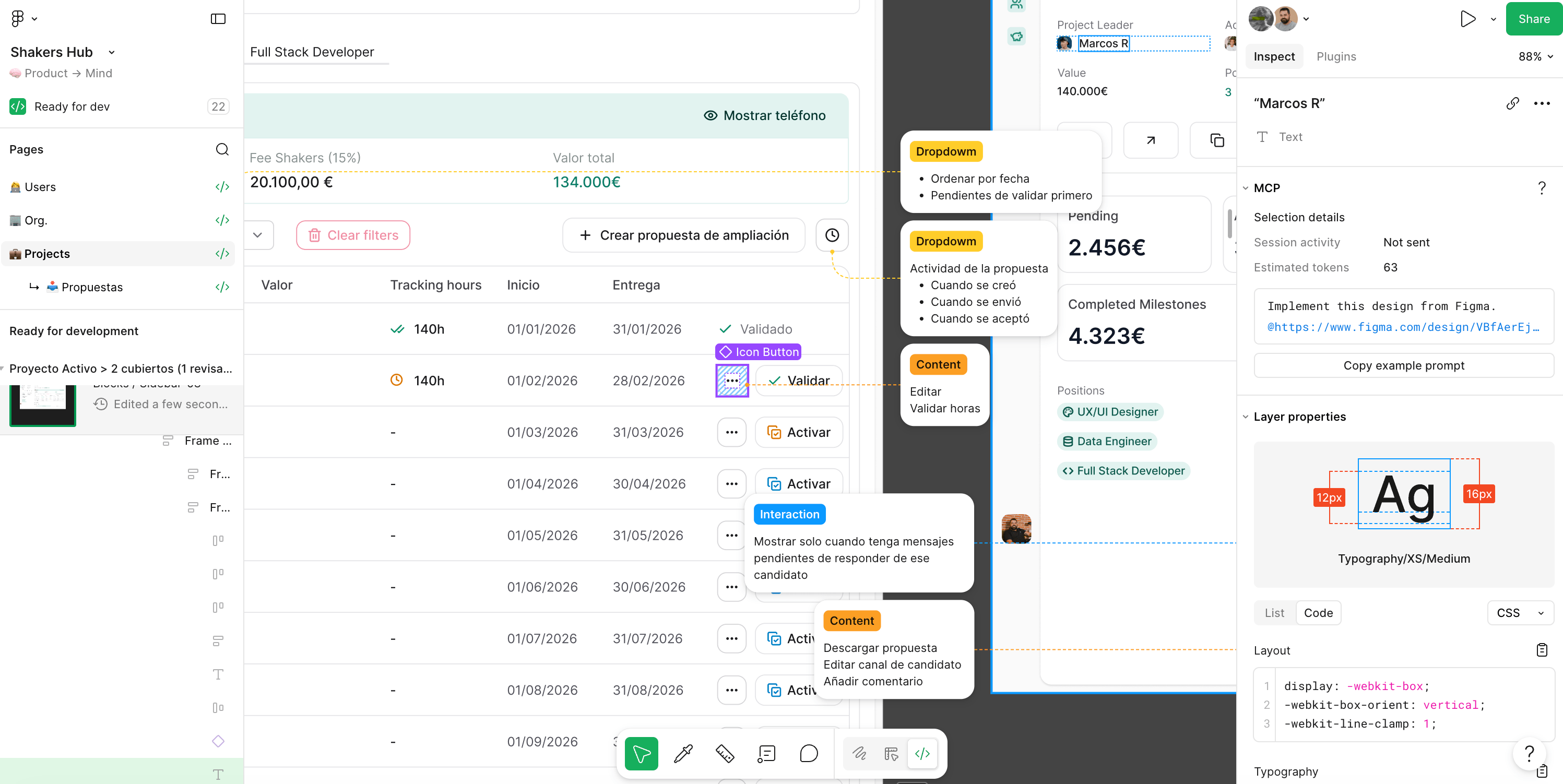
When moving from design to production, the engineering team uses Dev Mode to ensure technical precision. Features like the component playground allow developers to test different states and edge cases of a component, ensuring a smooth transition from the designer’s imagination to the final code. The product and data teams also use annotations frequently to communicate with developers.


Elevating the human craft
Automating routine tasks with AI
Shakers leverages AI to handle repetitive, time-consuming tasks like removing backgrounds, translating text into four languages, and summarizing long meeting dynamics. By automating these tasks, the team can redirect their energy toward higher-value creative work.
The design-part of a sprint used to take a whole week. Now, it’s just one or two days, which gives us more time to spend on interview analysis, or on thinking through the problem.
— Ignacio Alonso, Head of Product
The human side of great design
Despite the power of automation, Shakers believes that great design remains deeply human. While AI can automate average designs based on historical patterns, it takes human intuition to break rules, feel empathy during user interviews, and make the strategic decisions that define a premium product.
The machine is already quite powerful, but we are the one opening doors and changing the path. A huge part of designing and innovating is trying new things in a way that feels “wrong” until you find a new possibility that works out perfectly.
— Shakers Marketing Team
Moving from execution to architecture
As the tools handle more of the execution, the role of the Shakers team is evolving into one of architects and planners. Designers and developers now spend less time “putting bricks on top of one another” and more time designing the logic and architecture of the user experience. As Ignacio explains, “designers should be on the ’thinking’ side, not on the ’moving pixels’ part of it. AI might close that gap, and allow designers to be the architects of the solution.” Thanks to tools like Figma, the team can dedicate more time to strategic, higher-level thinking.
The key point is that the designer should be in charge of all the code regarding the design system. The developers can then focus on what’s important, like the architecture and the logic behind the flows.
— Elena Allegue, Engineering Manager
Scaling brand and product as one
Merging brand and product systems
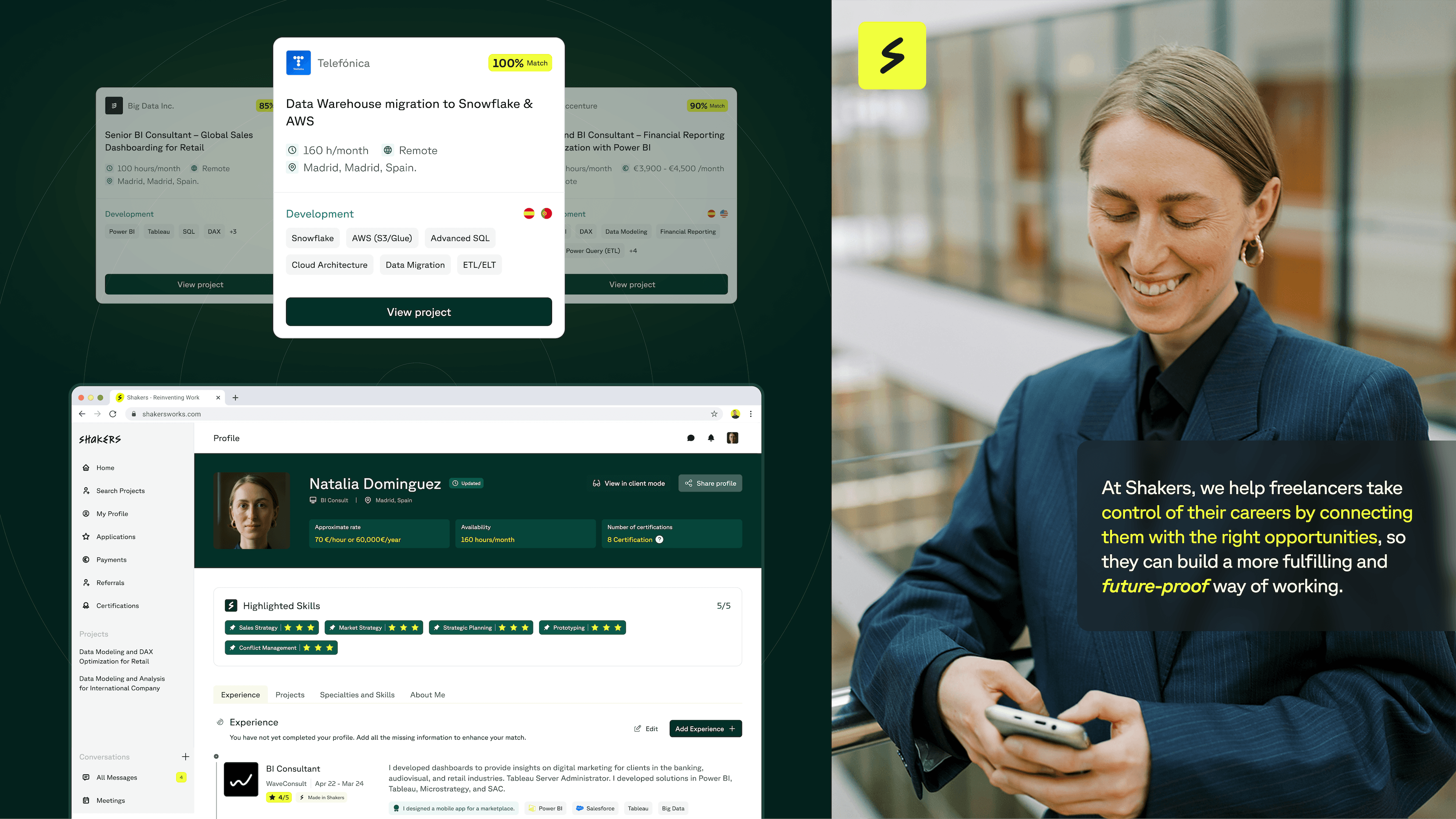
Shakers is currently working to integrate their brand and product design systems into a single, cohesive unit. By turning brand assets like talent cards and photography into Figma components, the marketing team can ensure that every piece of content remains consistent with the product’s visual identity.
Democratizing design with templates
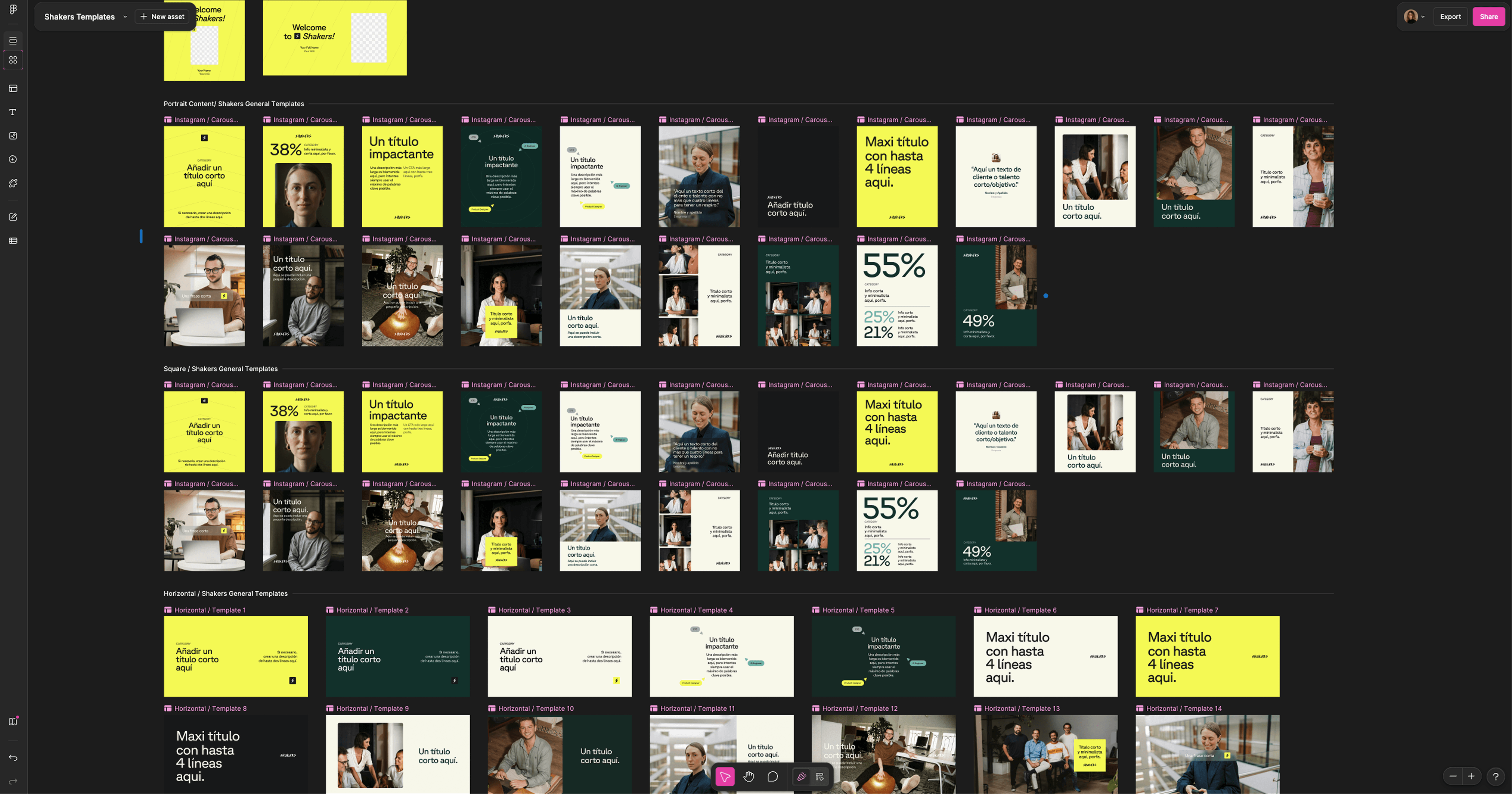
To maintain brand consistency across the company, the team uses Figma Buzz to provide a library of templates for non-designers. New hires can use these pre-approved layouts to create professional welcome posts in minutes, maintaining Shakers’ specific identity without requiring manual design oversight.

A clear increase in quality and speed
By reducing the time spent on manual execution, Shakers has significantly improved the quality of its work. The team now conducts ten times more user interviews and devotes much more time to research and workshops than before. The result is a faster workflow and outputs that are deemed to be three times better, thanks to fewer bugs and more meaningful user connections. Figma has empowered the team to become strategic thinkers who design the future of work, using tools to unlock their creativity. The end product is not only built faster, but is also more human, creative and refined.

If you'd like to learn more about Shakers' methodology, visit this page.
Article published on 30 June 2026.
See how Figma can help you scale design
Get in touch to learn more about how Figma can help companies scale design.
See how Figma can help you scale design
Great design has the potential to differentiate your product and brand. But nothing great is made alone. Figma brings product teams together in a fast and more inclusive design workflow.
Get in touch to learn more about how Figma can help companies scale design.
We’ll cover how Figma can help:
- Bring every step of the design process—from ideation, to creation, to building designs—into one place
- Accelerate design workflows with shared company-wide design systems
- Foster inclusivity in the product team process with products that are web-based, accessible, and easy to use