How Trackman built a design-first culture and a competitive edge
Trackman makes precision radar and camera-tracking technology for golf, baseball and softball, football, American football, and cricket. With more than five billion golf shots tracked in 2025 alone, and its simulators among the most sought-after private experiences in the world, the company has grown far beyond its engineering roots. As its products expanded to reach a wider audience, from five-year-olds in a golf simulator to Premier League football teams, design became a genuine competitive advantage. With Figma at the center of its product development process, Trackman's design team has evolved from a service function into a strategic driver of quality.
Challenge: Becoming design-first
The Copenhagen-based company has always been built on engineering excellence. Its radar and camera-tracking technology capture the precise trajectory, speed, and spin of a golf ball, a football, or a cricket delivery with extraordinary accuracy. Over the years, that precision has expanded beyond ball metrics to include club data and now bio-mechanical analysis.
For the first decade, that data was everything, and understandably so. The customers were elite golfers and coaches who needed hard numbers above all else. But markets evolve.
"Design is critical to Trackman's success," says Janus Clemmensen, Head of Product Design, who joined a decade ago as the company's first product designer. "It's a real competitive advantage, and for our customers it's the most essential part of how they interact with our products. That didn't happen by accident."
The team itself reflects the diversity of its users. Designers from across the world bring different perspectives and working styles into a culture that is genuinely collaborative. Designers regularly support each other's work, share knowledge, and actively upskill each other, whether that's in craft, research methods, or getting the most out of emerging tools. It's a team that learns together by default.
Central to how Trackman designs is the product trio model: a designer, a product manager, and a lead developer working in close partnership from early discovery through to delivery. For a product range that serves such a wide spectrum of users, that closeness is not optional. "You can't design for professional golfers or Premier League coaches in isolation," says Janus. "You need the whole picture, and that only comes when the three disciplines are genuinely working together, not just handing things off to each other."

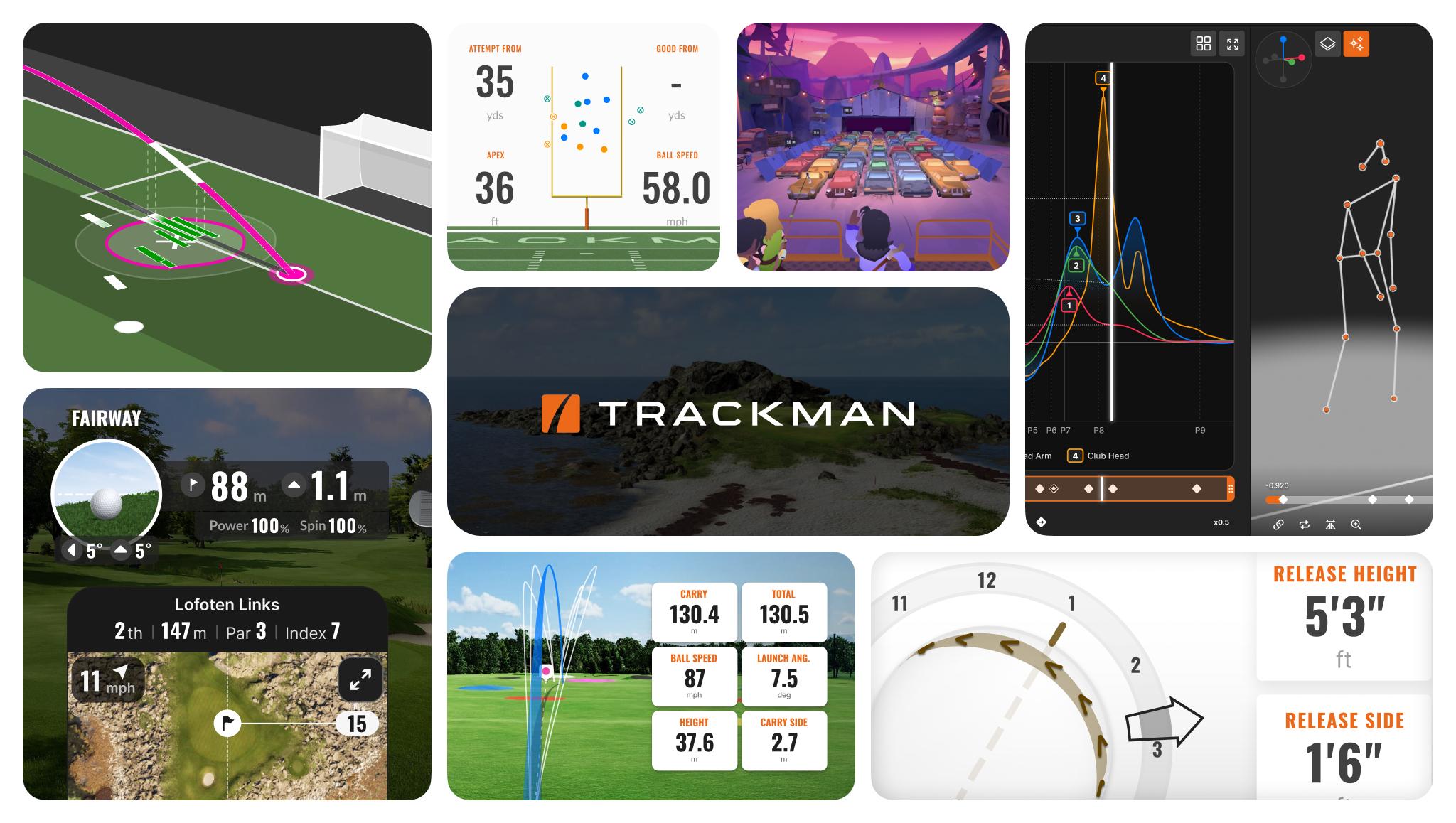
The shift was driven by Trackman's extraordinarily diverse user group, which includes everyone from five-year-olds stepping into a simulator for the first time to Rory McIlroy fine-tuning his swing. Premier League teams also use Trackman technology to rehearse corners, free kicks, and penalties, and baseball teams use it to track granular performance data. As the use cases have multiplied, the user experience needed to expand with them, from raw precision to something that works across a vast spectrum of goals, contexts, and expectations.
For the design team, the challenge is to knit all of that richness into a seamless experience. Consider the golf simulator context: a customer has booked an hour. Every second of onboarding friction is time stolen from their session. "Design needs to be invisible," says Janus. "We don't want anything to distract them from enjoying themselves and being able to perform well in their field."
Putting Figma front and center
As the design team's remit grew, so did the need for a tool that could hold everything together. "We go beyond typical desktop and mobile platforms, combining physical product design with digital, and building everything from websites to realistic golf simulator experiences," says Janus. "Figma is the single place where all of it lives."
Figma sits at the heart of the entire product development cycle, and has enabled the team to evolve from a function that made interfaces to one that helps shape products from the very start.
"We are truly solving problems," says Janus. "Our designers are embedded throughout the process all the way from ideation at the beginning, then working with product and development from early wireframes to the fully specced designs that are the blueprint for our engineers."
Dev Mode by design: closing the gap
Trackman's design team has put significant energy into making the design-to-development handoff as smooth as possible.
Early on, the team made a deliberate decision to rethink how their Figma files were structured. "We wanted the Figma file to be a genuine working reference for our devs, not just a picture of what the design should look like," says Janus.
Conor Mulcahy, a Senior Product Designer for Trackman's Golf app, sees it as a turning point. "We asked ourselves who we were really designing these files for. Once we answered that directly, everything about how we structured them changed."
The team redesigned their approach entirely, structuring files specifically for developers, with annotations that explain not just what something looks like but why decisions were made.
The results have been striking. "With Dev Mode, we get a lot fewer questions about what colour something should be or what the spacing is," says Conor. "The time saving is a major benefit. And because we're not fielding those smaller queries, we can have better conversations focused on whether or not we are solving the right problem."

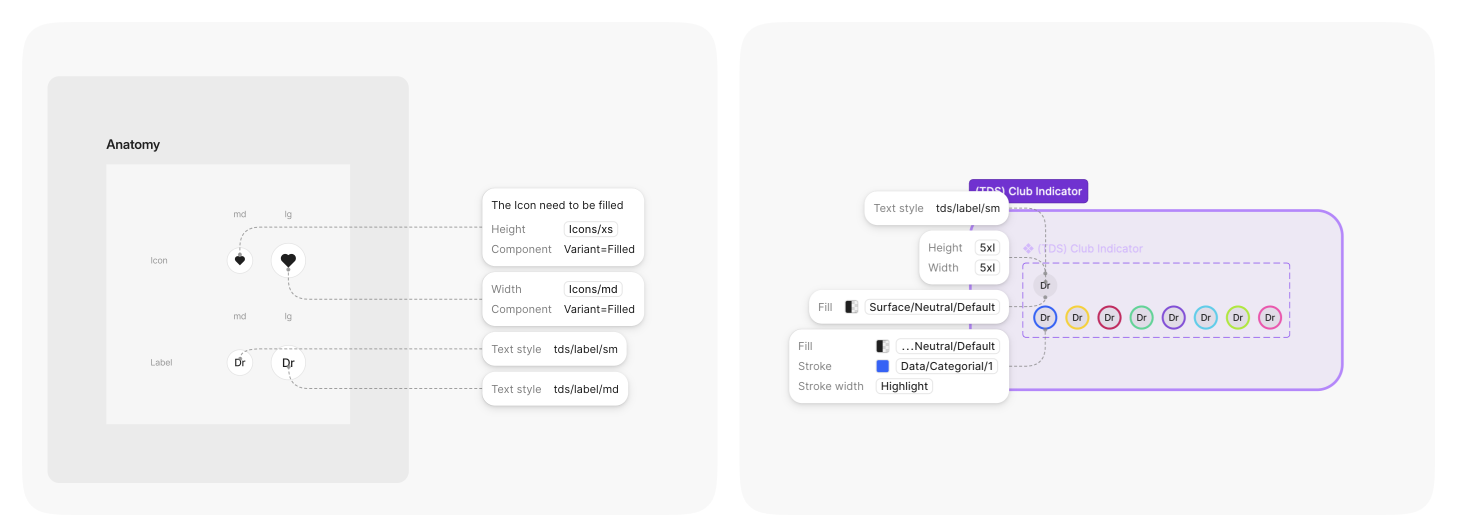
The Ready for Dev feature has been a game changer, giving developers visibility into what was updated between iterations and eliminating the guesswork. "It was an eye-opener for developers to come into our tool," says Conor. "There was actually a push from them to use the functionality. And now the output matches the design, there isn't as much cleanup required."
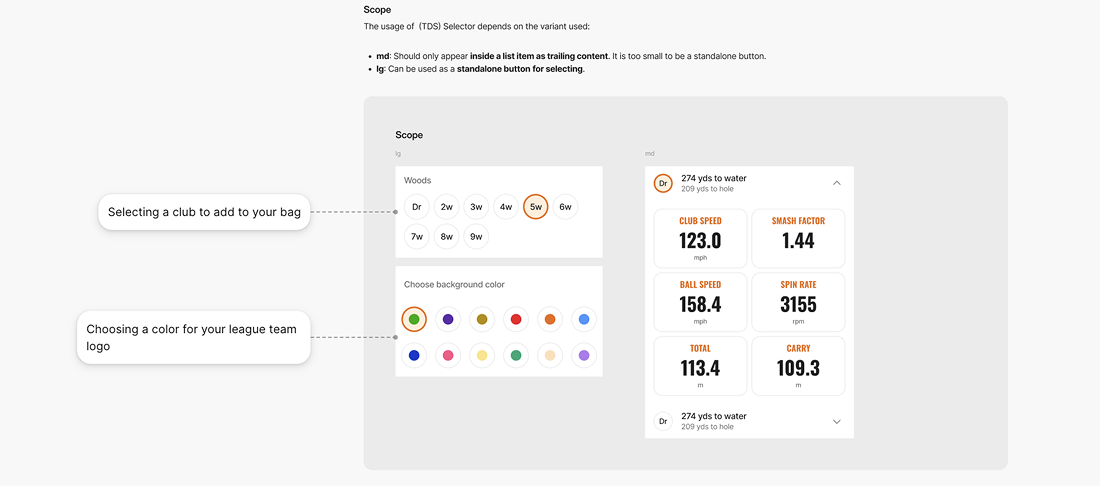
Code Connect has been equally transformative for the maturity of Trackman's design system. "When we rebuilt the design system for mobile, a lot of time was spent making sure things matched one to one," says Conor. "With Code Connect, anything named in Figma exactly matches the code. When I refer to a component, the developers know precisely what I mean."
Janus describes Trackman's developers as world class, and the design team's ability to close the gap between intent and output is built on shared standards. When designers and engineers share a language, the distance between a great idea and a great product gets a lot shorter.
The cumulative effect of these efficiency gains is time reinvested into the kind of work that makes products genuinely better. "We're doing more research, understanding the numbers, interviewing people," says Janus. "We have a user panel of approximately 3,000 users we can reach out to. That's massive for us in gaining meaningful feedback from our users."

Building Denmark's best design team
Since Janus started as the company's first designer, the team has grown significantly, with over twenty designers shaping products used by world class athletes around the world. This change wasn't accidental, and it didn't happen through process alone.
Janus credits this evolution to the designers. "We're a team that teaches each other, challenges each other, and cares enough about the work to ask harder questions than the brief originally contained."
When design earns genuine influence, not through politics but through the quality of its thinking and the trust it builds, products get better, experiences get sharper, and the distance between what a user needs and what they actually get starts to close.
"The team is still growing, still maturing," says Janus. "Our ambition is to build Denmark's best design team. The foundation is already there, now we build on it."
See how Figma can help you scale design
Get in touch to learn more about how Figma can help companies scale design.
See how Figma can help you scale design
Great design has the potential to differentiate your product and brand. But nothing great is made alone. Figma brings product teams together in a fast and more inclusive design workflow.
Get in touch to learn more about how Figma can help companies scale design.
We’ll cover how Figma can help:
- Bring every step of the design process—from ideation, to creation, to building designs—into one place
- Accelerate design workflows with shared company-wide design systems
- Foster inclusivity in the product team process with products that are web-based, accessible, and easy to use