
We showed up to Leadership Collective hoping to learn how leaders are guiding their teams through change, what expertise means now, and how they're keeping quality high as the pace picks up. Here's what we heard.
Share 7 questions we had going into Config Leadership Collective
This June, we brought together over 1,300 senior design, product, and engineering leaders at Config Push past what you thought was possible with code layers, Figma Motion, shaders, generative plugins and Weave tools, all on the canvas.
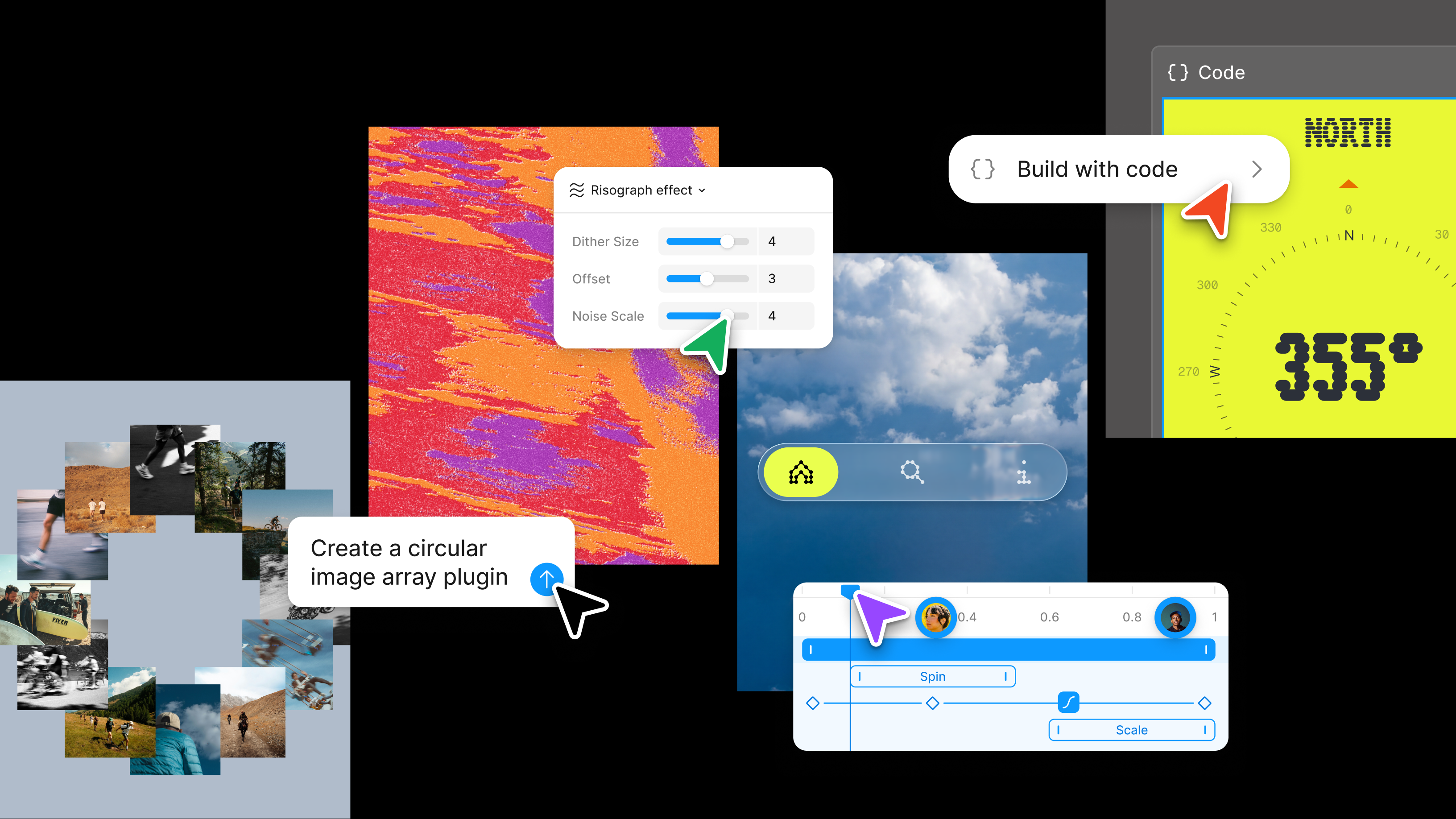
Config 2026: New materials, new tools and a more expressive canvas
1. How do you lead a change you're still figuring out yourself?
Almost everything about how we build today is novel. The people leading the charge are learning alongside everyone else. The tools change rapidly, so instead of clinging to a fixed process, many leaders are adjusting as they go. As OpenAI Head of Product Design Ian Silber puts it: "In just a few months our entire industry has shifted. It's hard to cling to a single process. It's more about adaptability."
They're also getting hands-on themselves, prototyping their own rough ideas and sharing the attempts that don't work. Airbnb Vice President of Design Teo Connor says: "You have to put yourself in a beginner's mindset, where you're playing and experimenting and creating. Everyone's a beginner, and everyone should be experimenting. I've been in it with my team, prototyping myself."
And they're giving their teams room to try new things. "We need to give people permission to experiment, and to be joyful about what they're creating, even when it doesn't work," says Expedia Vice President of Design Rachel Been.
In just a few months our entire industry has shifted. It's hard to cling to a single process. It's more about adaptability.
2. What's still worth keeping from how we used to work?
For all the change AI has brought, some fundamentals are holding their value. Across industries, leaders keep coming back to the same truths: staying close to the people you're building for, and holding onto the craft and care that made the work good in the first place.
Google Head of UX for Cloud AI Sheta Chatterjee puts it: "A lot has changed, but the fundamentals haven't. We're still making sure we're serving our users, that we understand their workflows. We still care about craft."
Patreon former Vice President of Design Jen Dunham echoes this sentiment: "I show up to my team as a designer and human first. There's a high risk of chasing the tool, but fundamentally we're designing for humans, and that's not changing."
3. What role does expertise play now?
For a long time, deep expertise meant being really good at executing a specific set of tasks. AI is absorbing some of that, but it isn't making expertise less valuable. It's shifting where the value lives. The leaders we heard from see the real work moving from execution toward judgment.
"We spent our careers taking an input, executing a task, and returning the output," says AWS Vice President of Design for Applied AI Solutions Hector Ouilhet. "But the thing that got us into this craft isn't that. It's something higher-order: taste, discernment, judgment. That's the work only we can do."
Sephora Senior Vice President of Technology Sneha Narahalli agrees: "Expertise is no longer having the answer, because there will always be more questions. It's knowing which answer works best in the context you're in."
Expertise is no longer having the answer, because there will always be more questions. It's knowing which answer works best in the context you're in.
4. How should we structure our teams for the AI era?
AI tools have blurred roles and raised new questions about how we build our teams and what skills to hire for. Leaders are taking a fresh look at their team structures, and at what kind of experience and talent they need.
At Airbnb, Teo Connor has rebuilt her team around small, self-contained units: "We're now operating in a pod structure, with each pod acting like a small startup. You've got the usual product, design, and engineering, but maybe a data scientist or someone from the business side too. It's about bringing together people who are really good at what they do, with a range of perspectives, and who can look at everything AI generates with a strong editing eye."
Jen Dunham is focused on building teams that are excited and ready for the moment: "I look for people who are scrappy and hungry, with wild ideas, a vocal team comfortable enough to fiercely debate one another. When everyone's nodding along with no dissent, that's a sign it's not working."
5. How do you actually get a team to adopt new tools?
Getting a team to actually adopt new tools takes more than telling them to use AI. At Expedia, Rachel Been hired someone specifically to build that infrastructure and is standing up an educational program to help her team get fluent in AI tools: "In order to ask for AI usage across workstreams, we have to provide the instruction. Once you give people that security in learning, it lets them accelerate."
OpenAI Head of Enterprise Alex Embiricos takes an incremental approach to adoption: "To help teams develop fluency, don't start top-down by mapping out which big workflows to automate. Instead, start with the smallest possible task. If you work in Slack, just ask the agent to summarize one long thread you don't want to read. Once people feel how helpful that is, it grows from there."
In order to ask for AI usage across workstreams, we have to provide the instruction. Once you give people that security in learning, it lets them accelerate.
6. How do you design agents people actually trust?
Agents don't behave the same way every time, which makes them hard to build and even harder to make trustworthy. But a few principles for earning that trust came up again and again. Build in trust gradually, rather than handing over full autonomy right away. And lean on the familiar, so a new capability doesn't leave people feeling lost.
Sheta Chatterjee designs that gradual trust directly into the product: "We don't hand agents full autonomy right away. We start them on small tasks with approval steps built in, so people can see what the agent's doing and sign off before it goes further. As people build trust in it, we pull back those checkpoints and let the agent act on its own more."
For Atlassian Chief Design Officer Charlie Sutton, trust also means not changing too much too fast: "A lot of good design is about balancing the familiar and the novel. When you can work with an agent, how much of the interface should you change? You have to be respectful that familiarity is super important to customers. As much as the novelty [of agents] is exciting, the people we serve often need those handholds and that familiarity."
7. How do you uphold the bar for quality now?
When anyone can ship anything If AI can make anyone a product builder, the real edge is knowing what’s worth shipping. Having the right tools can only take you so far. To become a master of your craft, you need to hone a point of view.

What matters when anyone can build


You never stop cultivating taste
Ian Silber sees it as the job of leaders themselves: "As leaders, you have to partner with other leaders to hold the bar from the top. When it looks like leadership just cares about moving fast, that's a bad signal."
Teo Connor has her team walk each other through their choices, so everyone's working from the same sense of what's good: "We take an old-school approach … ensuring they have a collective understanding of what good looks like."
And ultimately, Cisco President and Chief Product Officer Jeetu Patel says quality still hinges on human judgment: "You can't outsource taste. As you start building code automatically, what matters most becomes taste and good judgment. That's not something you can hand to an agent."
Leaders are still working their way through these questions by taking a hands-on approach, building, experimenting, comparing notes, and staying honest about what they're still working out. What carries them through is a belief that the qualities behind great work—taste, judgment, curiosity, and care—matter just as much now as they did before.


Emma Webster is a writer and editor on Figma’s Story Studio team. Previously, she’s worked as a writer at Faire and Audley Travel.