
How to write a problem statement: Top tips + examples
Learn how to write a problem statement that rallies your team with this step-by-step guide and useful examples. See how FigJam fosters better collaboration.
Skip to main content
Strategic planning

Most product teams have a general sense of how customers move through their experience. But without a clear picture of what’s happening at each step, it’s easy to fall back on assumptions.
Customer journey mapping turns that intuition into something concrete. It gives you a visual picture of every step a customer takes with your brand, the emotions driving them, and the points where they get stuck.
Read on to learn:
A customer journey map is a visual overview of the steps users take when interacting with your brand. It charts the touchpoints your customer goes through, helping you pinpoint where their user experience could be better.
For instance, a food delivery company may use a customer journey map to outline the process a user takes when ordering a meal on its app. Mapping each stage from browsing to delivery tracking surfaces pain points like long wait times, and helps the team act on them.
You’ll often hear customer journey and buyer journey used interchangeably, but they cover different ground. The buyer journey ends at purchase. The customer journey is everything that comes before and after.
A customer journey map includes the following components:
Pro tip: Focus on pain points when mapping a current state to fix existing problems, but prioritize feelings and actions when mapping a future state to design entirely new visions.
From early research to final alignment, FigJam makes it easy to map out every touchpoint and turn user insights into better team decisions.

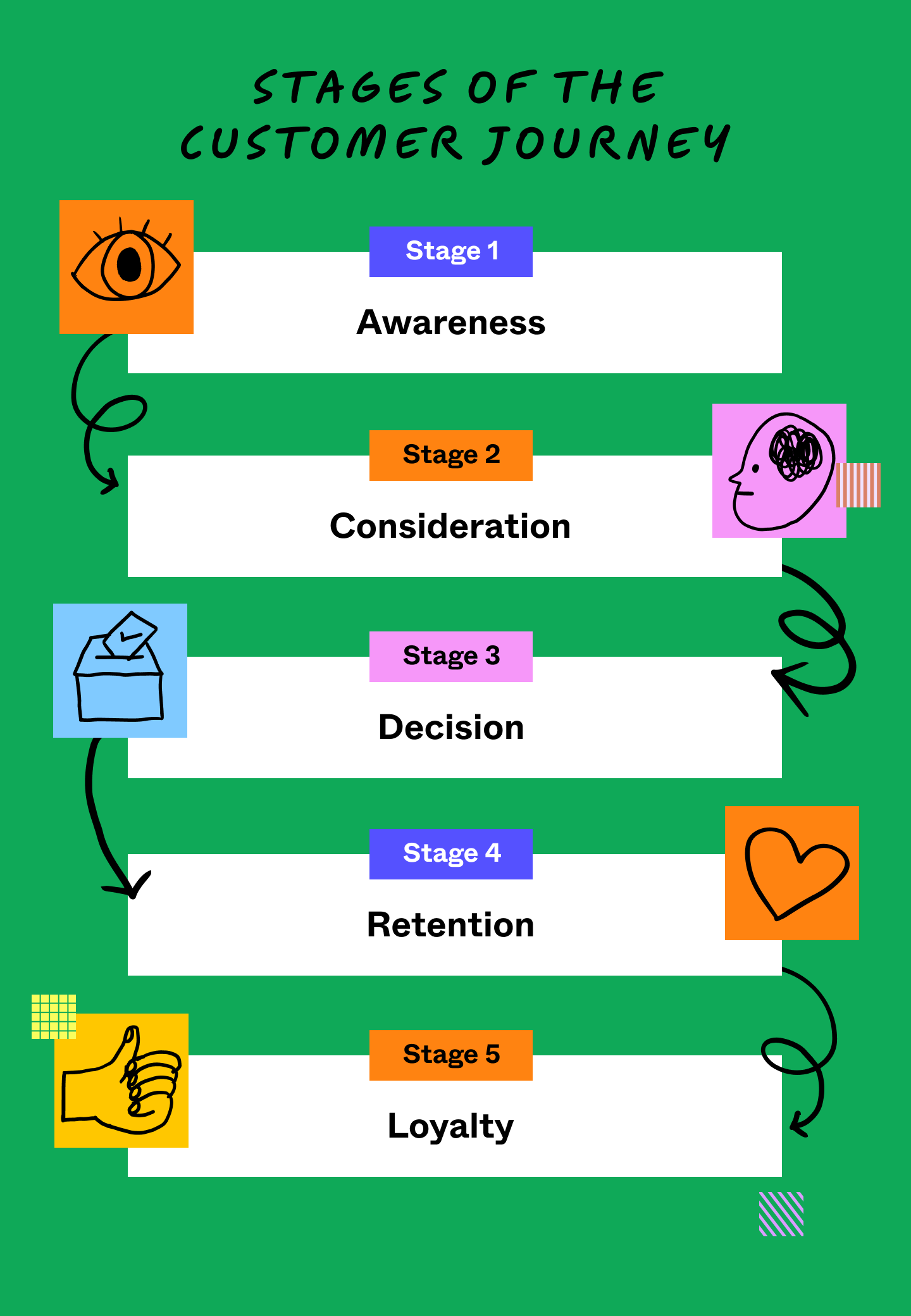
Here’s what each stage of the customer journey looks like:
The type of customer journey map you build depends on what you’re trying to learn. That might mean understanding how customers experience your product today, designing a better future state, or uncovering needs you haven’t yet addressed.
The current state map is the most common type and a good starting point for most teams. It captures how customers experience your product or service right now, including where they get stuck and why.
Use this type when you want to identify obstacles in an existing experience or decide what to prioritize next. If you’re mapping a B2B customer journey, this is usually the best place to start, because it surfaces friction points across a longer sales cycle.
A future state map visualizes the ideal journey a customer would take if everything worked the way you intended. It gives your team a shared vision to design toward before building begins. Use it when you’re planning something new, like a product launch or an expansion into a new audience segment.
A day-in-the-life map zooms out beyond your product to capture what a customer’s broader daily routine looks like. It includes their habits and frustrations, regardless of whether your brand is part of the picture yet. This one works best when you want to understand where your product could fit into a customer’s life.
A service blueprint is the most operationally detailed type of journey map. It maps both the customer-facing experience and the internal processes that support it. Service blueprints are most useful for larger organizations looking to improve end-to-end operations, where a breakdown in one internal process can quietly degrade the customer experience.

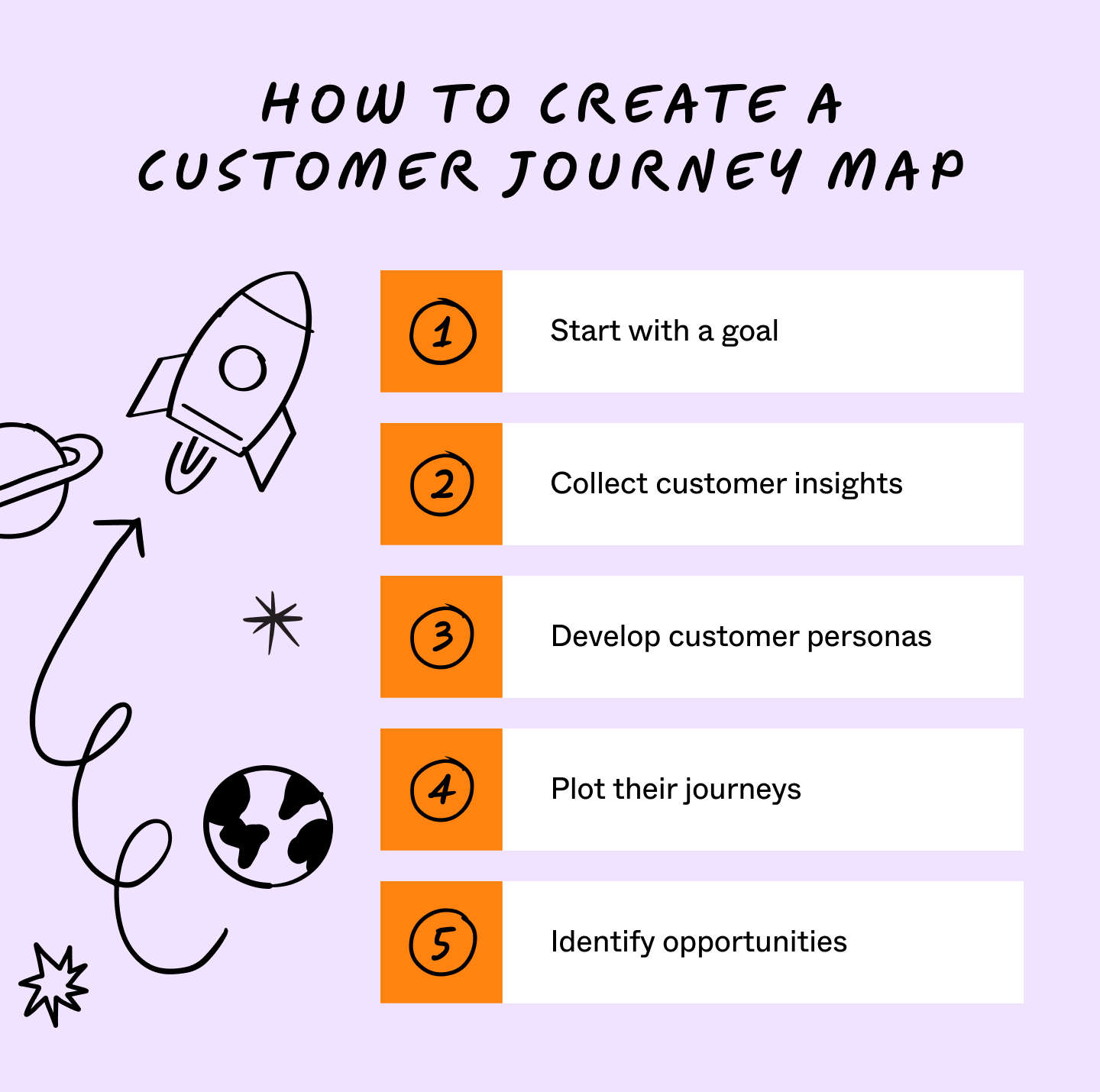
Your customer journey map doesn’t have to be elaborate to be effective. Follow these five steps to outline your customer journey map
Define the specific goal you hope to achieve, whether it’s solving a problem or exploring an opportunity. What do you need to know about your users to improve the customer experience? Is there a customer behavior you’re trying to understand, like abandoning a full shopping cart? Or are you looking for ways to win customers on TikTok? Or new ways to personalize the customer experience and encourage repeat business?
Once you’ve set your goal, identify the customer segment you’re targeting. This will help you focus your efforts and make sure your journey map resonates with their experiences.
Gather any relevant customer data to understand where key touchpoints and actions fall within the journey. Website and app analytics can help track behaviors like cart abandonment, while social media polls might reveal customer habits and preferences.
Because customers interact with brands through multiple channels, consider adding user interviews to the mix. Hearing customers describe their experiences directly helps you understand what’s working and what’s not.
Different customers have different needs and behaviors, so it’s important to build personas before you start mapping. Think of personas as the characters moving through your journey, each making different decisions and experiencing the process in their own way.
Start by outlining common customer behaviors, then refine each persona with research into their goals and the drivers of their decisions. User testing can help you pressure-test your assumptions and make sure each persona reflects a real segment of your audience.
Now turn your research into something visual. Plot the customer’s path from initial awareness to long-term advocacy. In FigJam, you can use stickers to highlight friction points and cursor chat to discuss diverging paths in real time. Netflix’s team found that mapping a complex, multi-platform user journey in FigJam made it easier to track dependencies and work through the early stages of a project without losing the thread.
As you map touchpoints, layer in the persona’s thoughts and feelings alongside their actions. This way, your whole team is working from the same understanding of the customer experience.
Based on your insights, identify areas to improve the customer experience. Ask yourself these questions:
Analyzing your journey map gives you a foundation for an action plan—one that aligns with your initial goal and strengthens customer loyalty.
Here are some ways customer journey maps can benefit your business:

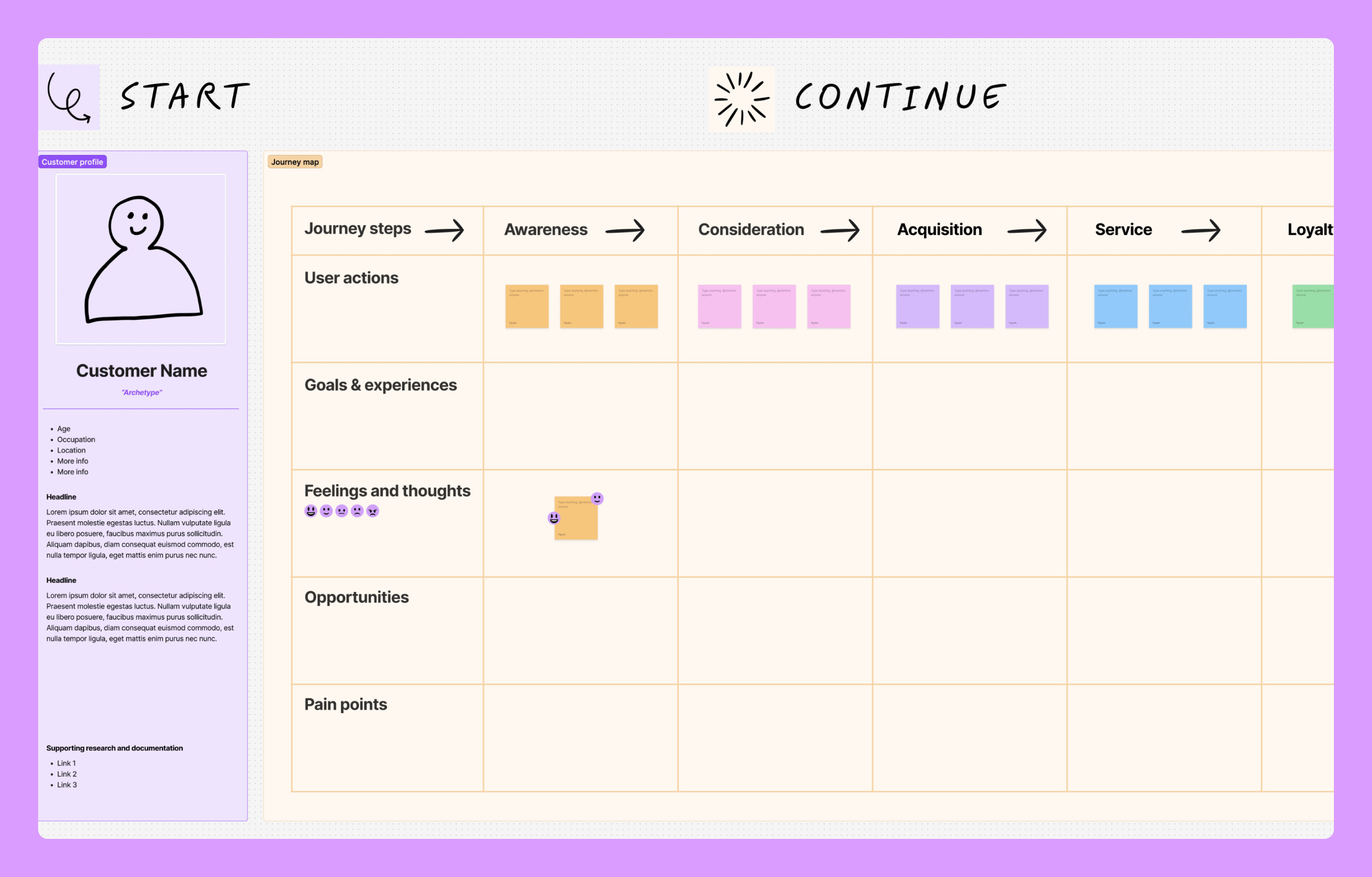
Customer journey maps look different depending on the product and what you’re trying to learn. Here are a few examples of what they can look like in practice, across different stages and use cases.
Take a food delivery app looking to improve the experience for users searching for quick meal options. Here’s what a customer journey map might look like at the consideration stage:
The consideration stage is critical for keeping customers engaged and preventing them from exploring competitors. Improving search and filters helps users find their ideal meal faster, making it less likely they’ll abandon the app altogether.
Use FigJam’s customer journey map template to visualize every step of your customer’s experience.
Here’s what a customer journey map might look like for an online clothing app focused on building stronger customer loyalty.
The customer has made their purchase and has just received their items. During the retention stage, your map might uncover the following:
Even returning customers run into frustrating moments. This example highlights opportunities to recover from those situations and turn them into chances to strengthen the relationship.
The real value of a customer journey map shows up when your whole team is looking at the same picture and asking the same questions. With Figma, you’ve got the tools to build that picture together, from early discovery through design and delivery.
Here’s how:
Use FigJam to visualize every step of your customer’s experience and get your whole team on the same page.
Learn how to write a problem statement that rallies your team with this step-by-step guide and useful examples. See how FigJam fosters better collaboration.

Learn how to create context diagrams, their purpose, key elements, common use cases, and why they’re an effective communication tool.

Learn how to make a mood board and gain inspiration with FigJam’s free templates—see the benefits of mood boards and design examples.


Kotter’s eight-step change model can help your organization drive effective, meaningful, and lasting change. Learn how FigJam can guide you through every step.

Turn your sprint reviews into actionable sessions. Discover how to collect feedback, set priorities, and boost team collaboration with this five-step guide.

Learn what a sequence diagram is, common symbols and components, and how to make your own, plus examples using FigJam templates.